True zero-down is rare on Texas land. What is real: the VLB loan at 5% down for veterans and low-down owner financing — plus how to spot the offers that hide the cost.
Buying land with no money down in Texas is rare. Most Texas land sellers and every typical land lender require a down payment, and listings that advertise zero down usually recover the money through a higher price or added fees. The realistic paths are the Texas Veterans Land Board loan at 5 percent down for eligible veterans and low-down owner financing.
The sections below cover why zero-down offers deserve scrutiny, how the VLB program works, what low-down owner financing looks like, how home equity fits, and where small-budget buyers find acreage within an hour of Austin. La Tierra Realty is an Austin-based land company that sells surveyed, unrestricted 1 to 25 acre tracts in Central and North Texas with owner financing through Stonebridge Purchasing (NMLS #2349261).
Can You Really Buy Land With No Money Down in Texas?
You can rarely buy land with no money down in Texas. Sellers who finance land require a down payment because a buyer with nothing invested is more likely to walk away, and banks treat raw land as weaker collateral than a house. According to Herring Bank's May 2026 Texas land loan guide, lenders ask 35 to 50 percent down on raw land.
A down payment does two jobs. The payment shows the seller or lender that the buyer is committed, and it gives the buyer equity from the first day. Land lenders also price risk into the rate: Mortgage-Info.com's September 2026 land loan survey lists raw-land rates of 9 to 11.5 percent at many lenders, compared with about 7.75 percent at Farm Credit for well-qualified borrowers.
Zero-down land listings deserve a close read. Common catches include:
- An inflated price. The tract is priced well above comparable land, so the missing down payment is built into every monthly payment for years.
- Fees in place of a down payment. A "document," "setup," or "processing" fee of several thousand dollars replaces the down payment in everything but name.
- Forfeiture terms. Contract-for-deed language under which one missed payment can cost the buyer everything paid so far. Texas Property Code Sections 5.061 to 5.087 regulate these executory contracts for that reason.
A modest, transparent down payment on fairly priced land beats a free entry into a bad contract.
Does the Texas Veterans Land Board Offer a Low-Down Land Loan?
Yes. The Texas Veterans Land Board (VLB), administered by the Texas General Land Office, lends eligible Texas veterans and military members up to $200,000 to buy at least one acre of Texas land with a minimum 5 percent down payment on a 30-year fixed rate. As of September 2026, the General Land Office lists the VLB land loan rate at 7.25 percent.
The General Land Office describes the program as "the only one of its kind in the nation." State bonds fund it rather than federal money, which is why it exists alongside the VA home loan instead of inside it. Key rules from the GLO's land loan page, September 2026:
- Down payment and cap: 5 percent minimum; loans up to $200,000, or $275,000 for two eligible veteran spouses buying one tract.
- Land: at least one acre, wholly in Texas, not counting land under a public road, with legal access at least 60 feet wide.
- Fees: a $325 appraisal and contract service fee after application; the GLO states "there is no pre-payment penalty."
- Prior ownership: the land must not have been owned by the applicant or spouse within the previous three years.
- Timing: prequalification in 7 to 10 business days, valid for 45 days, then about 45 to 60 days of processing after contract.
On a $100,000 tract, the VLB's 5 percent minimum is $5,000 at closing. The VLB land loan covers the land only; construction uses separate VLB programs, and the federal VA home loan does not buy raw land by itself. Veterans who need to close in weeks instead of months often choose owner financing and keep the VLB for a later purchase.
How Does Owner Financing Work With a Low Down Payment?
Owner financing means the land seller finances the purchase directly: the buyer makes a down payment, signs a promissory note, and pays the seller monthly, with no bank underwriting. Because the seller sets the terms, the down payment is often far lower than the 35 to 50 percent that Herring Bank's May 2026 guide reports for bank raw-land loans.
La Tierra Realty finances its tracts through Stonebridge Purchasing (NMLS #2349261) with a low down payment and terms set per tract, not from a generic chart. Ask about current terms on the specific tract you want. Typical La Tierra financing closes with a warranty deed at closing plus a note and deed of trust, so the buyer holds title from day one and the seller holds a lien, the same structure a bank uses.
A legitimate owner-financed purchase includes:
- A written promissory note with a clear payment schedule, interest rate, and payoff terms.
- A recorded warranty deed and deed of trust, handled through a title company, not a handshake.
- A survey and full documentation of the tract, which La Tierra includes with every property.
Owner financing also closes faster than either alternative: often 2 to 4 weeks, versus 45 to 60 days of VLB processing and 4 to 8 weeks at a bank. Read how owner financing works on Texas land for the full mechanics, and owner financing vs. a bank land loan for the trade-offs.
Can Home Equity or Savings Cover the Down Payment?
Yes. A homeowner can borrow a land down payment, or the whole price, through a home equity loan or HELOC. According to Texas Constitution Article XVI, Section 50(a)(6), a Texas home equity loan plus all other liens cannot exceed 80 percent of the home's fair market value, so the borrowing room depends on existing equity.
Home equity works for disciplined borrowers, with two cautions. The house secures the new debt, and the household now carries two payments. Talk to your lender and a financial adviser before choosing this route, and compare the equity loan rate with the owner-financing rate on the tract.
Savings is the other route. Because owner-financed down payments are low, the goal is often months away, not years: a buyer setting aside $500 a month has $6,000 after one year. La Tierra's guide to down payments on Texas land shows what buyers bring to closing under each financing path, so you can set a realistic number before you shop.
Which Low-Down Option Fits Your Situation?
The Texas Veterans Land Board fits eligible veterans who can wait two to three months to close. Owner financing fits everyone else who wants a low down payment and a fast close. Home equity fits homeowners with room under the 80 percent cap. Bank loans fit buyers holding 35 to 50 percent in cash, per Herring Bank's May 2026 guide.
| Option | Typical down payment | Who it fits | Watch for |
|---|
| "Zero down" listing | $0 advertised | Nobody without reading the fine print | Inflated price, setup fees, forfeiture clauses |
| VLB land loan | 5% minimum (GLO, Sept 2026) | Eligible Texas veterans and service members | 1-acre minimum, 60-ft access, 45–60 day processing |
| Owner financing (La Tierra / Stonebridge) | Low; ask about current terms | Any buyer who wants a fast close | Terms set per tract; confirm note and deed of trust |
| Home equity loan or HELOC | Borrowed against the home | Homeowners with equity | 80% combined loan cap; the house secures the debt |
| Bank or Farm Credit land loan | 35–50% raw land (Herring Bank, May 2026) | Buyers with cash and strong credit | 9–11.5% raw-land rates at many lenders (Mortgage-Info.com, Sept 2026) |
A $120,000 tract makes the difference concrete: $6,000 down with the VLB, $42,000 to $60,000 down at a bank asking 35 to 50 percent, and a low, tract-specific amount with owner financing.
How Can You Stretch a Small Budget Further?
Texas A&M's Real Estate Research Center reported in its Q2 2026 rural land report that Texas rural land averaged $5,218 per acre, up 3.27 percent year over year, and the Austin-Waco-Hill Country region reached $8,040 per acre, up 8.63 percent. Buying east of Austin, right-sizing the acreage, and choosing utility-ready tracts all cut the cash needed.
The same TRERC report notes that "buyers remain cautious due to the cumulative effect of steep appreciation and elevated interest rates," yet the Austin-Waco-Hill Country average still set a record. Those figures are regional averages for broad rural acreage; small subdivided tracts near Austin price differently, but the direction is clear. Waiting rarely makes land near Austin cheaper.
- Buy east of Austin, not west. The Hill Country west of the city carries premium prices. The Lockhart, Luling, and Bastrop County corridors offer more land per dollar; see land for sale near Austin.
- Right-size the acreage. A 2 to 5 acre unrestricted tract serves a home, a garden, and a few animals at a fraction of the entry cost of 15 acres.
- Choose tracts with utilities available. Water and electric at the property line save setup money that would otherwise compete with your down payment.
- Avoid restricted subdivisions with dues. No HOA means no recurring fees eating the budget.
For per-acre ranges by area, read how much an acre costs in Central Texas.
Where Is Low-Down Acreage Within an Hour of Austin?
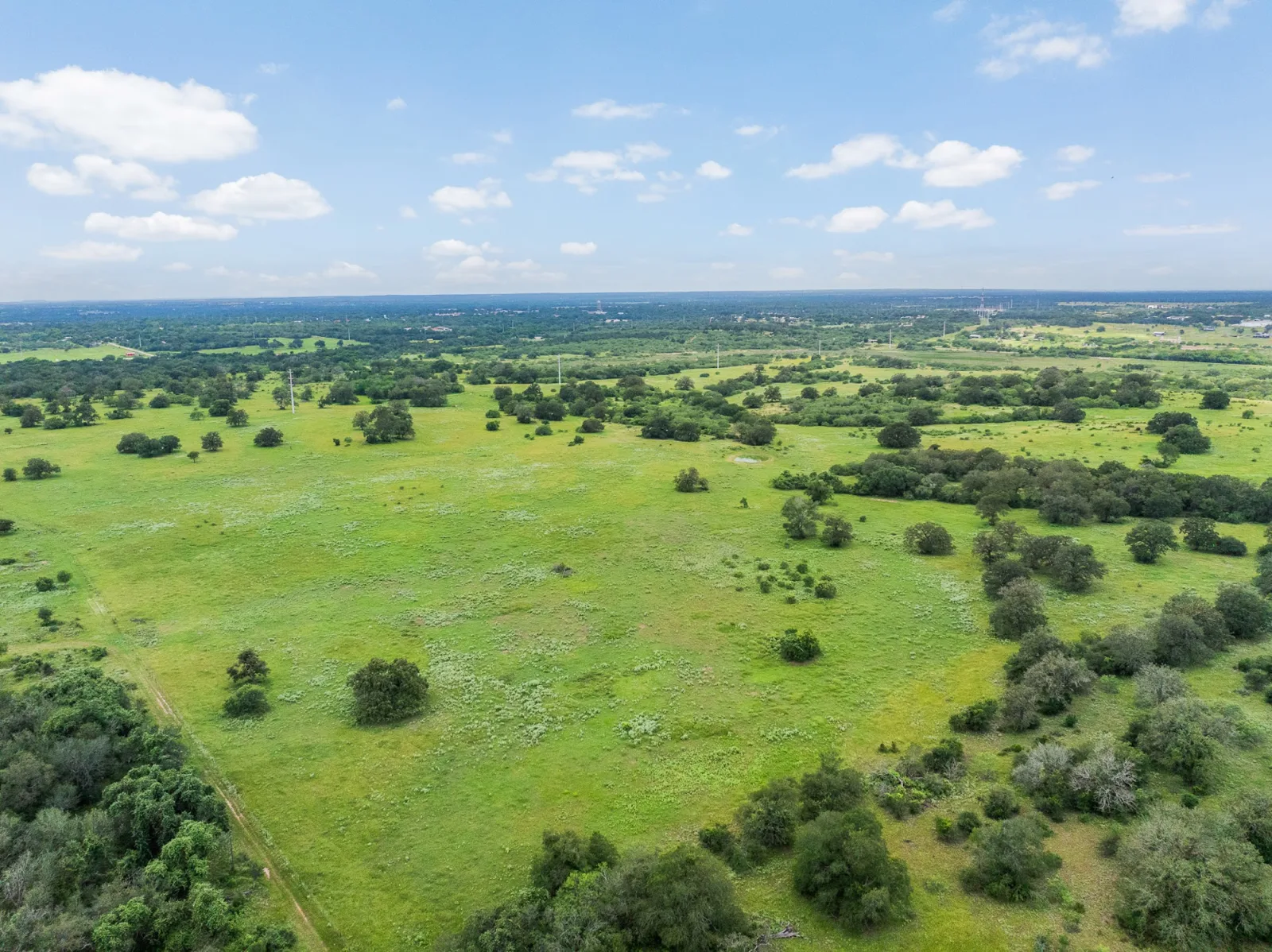
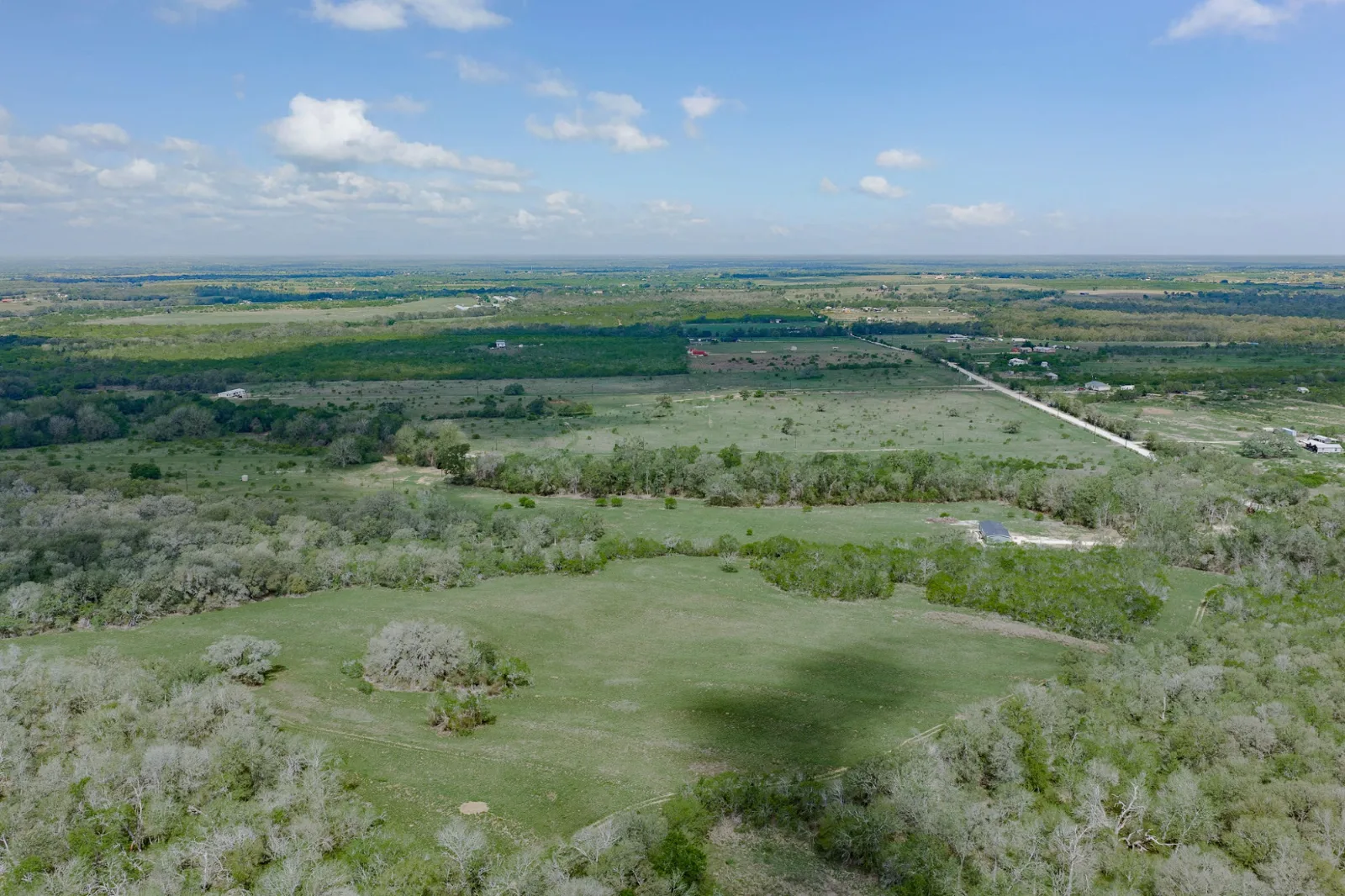
Low-down owner financed acreage near Austin is concentrated east and southeast of the city, in Caldwell, Bastrop, Gonzales, and Milam counties. La Tierra Realty sells unrestricted tracts there starting at $72,000 at Arroyo Farms in Burlington and $80,000 at Mineral Springs Ranches in Luling and Waelder Ranches in Waelder, each with a survey and owner financing through Stonebridge Purchasing.
Caldwell County, which covers Lockhart, Luling, Dale, and Seawillow, sits roughly 30 to 60 minutes from Austin and holds most of La Tierra's lowest-entry tracts. Read why buyers are choosing Lockhart for the county picture. Current low-down options include:
Every La Tierra tract comes with a survey and full documentation, owner financing through Stonebridge, and service in English and Spanish. The realistic version of no money down is not zero, but a down payment low enough that the land stops being out of reach. See every tract on the available properties page.
Ask About Current Terms on a Low-Down Tract
La Tierra Realty's surveyed, unrestricted tracts east of Austin come with owner financing through Stonebridge Purchasing and a low down payment set per tract. Tell us your budget and we will show you what fits. Call (512) 980-1719. Atención en español.
Browse Texas Land
Download the Free Buying Guide
Sources: Texas General Land Office, Veterans Land Board land loan program page (September 2026); Texas Real Estate Research Center at Texas A&M University, Texas Rural Land Markets Second Quarter 2026 (2026); Herring Bank, Texas Land Loans guide (May 2026); Mortgage-Info.com, Land Loans 2026 (September 2026); Texas Constitution, Article XVI, Section 50 (2026); Texas Property Code, Sections 5.061–5.087 (2026); U.S. Department of Veterans Affairs, VA Lenders Handbook (2026).
Frequently Asked Questions
What is the lowest down payment for land in Texas?
The lowest widely available down payment on Texas land is the Texas Veterans Land Board's 5 percent minimum, published by the Texas General Land Office for eligible veterans as of September 2026. For non-veterans, owner-financed tracts carry the lowest entry, with the seller setting the amount per tract. La Tierra Realty's financing through Stonebridge Purchasing uses a low down payment; ask about current terms on the tract you want.
Do I need good credit to buy owner-financed land in Texas?
Owner financing does not run through bank underwriting, so the seller sets the qualification standards, and buyers with limited or imperfect credit history often qualify. Standards vary by seller and tract. La Tierra Realty's financing partner, Stonebridge Purchasing (NMLS #2349261), reviews each buyer, so ask what documents are needed rather than assuming a review is waived.
Can I use a VA home loan to buy land in Texas?
No. The VA home loan guaranty covers a home, not raw land by itself, according to the VA Lenders Handbook. Texas veterans have a separate state option: the Texas Veterans Land Board land loan, which the Texas General Land Office lists at 5 percent down and up to $200,000 as of September 2026. A VA loan can finance a house built on the tract later.
Is it smarter to save a bigger down payment or buy land sooner?
Neither answer fits everyone, but the price trend favors acting. Texas A&M's Real Estate Research Center reported the Austin-Waco-Hill Country region at $8,040 per acre in its Q2 2026 rural land report, up 8.63 percent in a year. A larger down payment lowers the monthly payment; a low-down owner-financed purchase locks the price now and builds equity while you pay.
What should I check before signing a zero-down land offer?
Compare the price with recent sales of similar tracts, add up every fee due at signing, and read the default clause. Confirm the seller will deliver a recorded deed with a note and deed of trust rather than a contract for deed, which Texas Property Code Sections 5.061 to 5.087 regulate. Get a survey and a title commitment before paying anything.
This article is general information for Texas land buyers and is not legal, tax, or financial advice. Veterans Land Board rates, limits, and eligibility rules change; confirm current terms with the Texas General Land Office at glo.texas.gov. Owner-financing terms on La Tierra tracts are set per tract and subject to approval; ask about current terms before you buy. La Tierra Realty is not affiliated with the Texas Veterans Land Board.
Comprar terreno sin enganche en Texas es raro. Casi todos los vendedores y todos los prestamistas típicos de terreno exigen un enganche, y los anuncios de "cero enganche" recuperan ese dinero con un precio más alto o cuotas extra. Los caminos reales son el préstamo del Texas Veterans Land Board con 5 por ciento de enganche para veteranos elegibles y el financiamiento del dueño con enganche bajo.
Las secciones de abajo explican por qué las ofertas de cero enganche merecen revisión, cómo funciona el programa del VLB, cómo es el financiamiento del dueño con enganche bajo, cómo encaja la plusvalía de su casa y dónde encuentran acres los compradores con presupuesto limitado a una hora de Austin. La Tierra Realty es una empresa de terrenos con sede en Austin que vende lotes deslindados y sin restricciones de 1 a 25 acres en el centro y norte de Texas con financiamiento del dueño a través de Stonebridge Purchasing (NMLS #2349261).
¿De Verdad Se Puede Comprar Terreno Sin Enganche en Texas?
Rara vez se puede comprar terreno sin enganche en Texas. Los vendedores que financian terreno exigen un enganche porque un comprador sin nada invertido abandona el trato con facilidad, y los bancos ven el terreno sin construir como garantía más débil que una casa. Según la guía de Herring Bank de mayo de 2026, los prestamistas piden de 35 a 50 por ciento de enganche en terreno sin construir.
Un enganche cumple dos funciones. Le muestra al vendedor o al prestamista que el comprador está comprometido, y le da al comprador plusvalía desde el primer día. Los prestamistas de terreno también cobran el riesgo en la tasa: el sondeo de préstamos de terreno de Mortgage-Info.com de septiembre de 2026 lista tasas de 9 a 11.5 por ciento para terreno sin construir en muchos prestamistas, contra cerca de 7.75 por ciento en Farm Credit para compradores bien calificados.
Los anuncios de terreno sin enganche merecen una lectura cuidadosa. Las trampas comunes incluyen:
- Un precio inflado. El lote está muy por encima de terrenos comparables, así que el enganche que falta queda metido en cada mensualidad durante años.
- Cuotas en lugar de enganche. Una cuota de "documentación", "apertura" o "trámite" de varios miles de dólares sustituye al enganche en todo menos el nombre.
- Cláusulas de pérdida total. Lenguaje de contrato para escritura bajo el cual un solo pago atrasado le puede costar al comprador todo lo pagado. Las Secciones 5.061 a 5.087 del Código de Propiedad de Texas regulan estos contratos ejecutorios por esa razón.
Un enganche modesto y transparente sobre un terreno a precio justo vale más que una entrada "gratis" a un mal contrato.
¿El Texas Veterans Land Board Ofrece un Préstamo de Terreno con Enganche Bajo?
Sí. El Texas Veterans Land Board (VLB), administrado por la Oficina General de Tierras de Texas, presta a veteranos y militares elegibles de Texas hasta $200,000 para comprar al menos un acre en Texas con enganche mínimo del 5 por ciento y tasa fija a 30 años. A septiembre de 2026, la Oficina General de Tierras publica la tasa del préstamo de terreno del VLB en 7.25 por ciento.
La Oficina General de Tierras describe el programa como "el único de su tipo en la nación". Se financia con bonos estatales y no con fondos federales, por eso existe junto al préstamo hipotecario VA y no dentro de él. Reglas clave de la página de préstamos de terreno del GLO, septiembre de 2026:
- Enganche y tope: 5 por ciento mínimo; préstamos de hasta $200,000, o $275,000 para dos cónyuges veteranos elegibles que compran un mismo lote.
- Terreno: al menos un acre, completamente en Texas, sin contar el terreno bajo un camino público, con acceso legal de al menos 60 pies de ancho.
- Cuotas: $325 por avalúo y servicio de contrato después de la solicitud; el GLO indica que "no hay penalidad por prepago".
- Propiedad previa: el terreno no debe haber sido propiedad del solicitante ni de su cónyuge en los tres años anteriores.
- Tiempos: precalificación en 7 a 10 días hábiles, vigente 45 días, y después unos 45 a 60 días de procesamiento tras el contrato.
En un lote de $100,000, el mínimo del 5 por ciento del VLB son $5,000 al cierre. El préstamo de terreno del VLB cubre solo el terreno; la construcción usa programas separados del VLB, y el préstamo hipotecario federal VA no compra terreno sin construir por sí solo. Los veteranos que necesitan cerrar en semanas y no en meses a menudo eligen el financiamiento del dueño y guardan el VLB para una compra posterior.
¿Cómo Funciona el Financiamiento del Dueño con Enganche Bajo?
El financiamiento del dueño significa que el vendedor del terreno financia la compra directamente: el comprador da un enganche, firma un pagaré y le paga al vendedor cada mes, sin evaluación bancaria. Como el vendedor fija los términos, el enganche suele ser mucho menor que el 35 a 50 por ciento que la guía de Herring Bank de mayo de 2026 reporta para préstamos bancarios de terreno sin construir.
La Tierra Realty financia sus lotes a través de Stonebridge Purchasing (NMLS #2349261) con enganche bajo y términos fijados por lote, no con una tabla genérica. Pregunte por los términos actuales del lote específico que le interesa. El financiamiento típico de La Tierra cierra con escritura de garantía (warranty deed) al cierre más un pagaré y un deed of trust, así que el comprador tiene el título desde el primer día y el vendedor conserva un gravamen, la misma estructura que usa un banco.
Una compra legítima con financiamiento del dueño incluye:
- Un pagaré escrito con calendario de pagos, tasa de interés y condiciones de liquidación claras.
- Una escritura de garantía y un deed of trust registrados, tramitados por una compañía de títulos, no de palabra.
- Un levantamiento y documentación completa del lote, que La Tierra incluye con cada propiedad.
El financiamiento del dueño también cierra más rápido que las otras dos opciones: a menudo 2 a 4 semanas, contra 45 a 60 días de procesamiento del VLB y 4 a 8 semanas en un banco. Lea cómo funciona el financiamiento del dueño en terreno de Texas para la mecánica completa, y financiamiento del dueño vs. préstamo bancario de terreno para los pros y contras.
¿La Plusvalía de Su Casa o Sus Ahorros Pueden Cubrir el Enganche?
Sí. Un propietario puede pedir prestado el enganche del terreno, o el precio completo, con un préstamo de plusvalía o una línea HELOC. Según el Artículo XVI, Sección 50(a)(6) de la Constitución de Texas, un préstamo de plusvalía más los demás gravámenes no puede superar el 80 por ciento del valor de mercado de la casa, así que el margen depende de la plusvalía que ya tiene.
La plusvalía funciona para compradores disciplinados, con dos advertencias. La casa respalda la nueva deuda, y el hogar ahora carga con dos pagos. Hable con su prestamista y con un asesor financiero antes de elegir este camino, y compare la tasa del préstamo de plusvalía con la tasa del financiamiento del dueño en el lote.
El ahorro es el otro camino. Como los enganches con financiamiento del dueño son bajos, la meta suele estar a meses, no a años: un comprador que aparta $500 al mes junta $6,000 en un año. La guía de La Tierra sobre enganches para terreno en Texas muestra lo que los compradores llevan al cierre con cada tipo de financiamiento, para que fije una cifra realista antes de buscar.
¿Qué Opción de Enganche Bajo Encaja con Su Situación?
El Texas Veterans Land Board encaja con veteranos elegibles que pueden esperar de dos a tres meses para cerrar. El financiamiento del dueño encaja con quienes quieren enganche bajo y cierre rápido. La plusvalía encaja con propietarios con margen bajo el tope del 80 por ciento. Los préstamos bancarios encajan con compradores con 35 a 50 por ciento en efectivo, según Herring Bank (mayo 2026).
| Opción | Enganche típico | A quién le sirve | Cuidado con |
|---|
| Anuncio de "cero enganche" | $0 anunciado | A nadie sin leer la letra pequeña | Precio inflado, cuotas de apertura, cláusulas de pérdida total |
| Préstamo de terreno del VLB | 5% mínimo (GLO, sept. 2026) | Veteranos y militares elegibles de Texas | Mínimo de 1 acre, acceso de 60 pies, 45–60 días de procesamiento |
| Financiamiento del dueño (La Tierra / Stonebridge) | Bajo; pregunte por los términos actuales | Cualquier comprador que quiera cerrar rápido | Términos por lote; confirme pagaré y deed of trust |
| Préstamo de plusvalía o HELOC | Prestado contra la casa | Propietarios con plusvalía | Tope combinado del 80%; la casa respalda la deuda |
| Préstamo bancario o de Farm Credit | 35–50% en terreno sin construir (Herring Bank, mayo 2026) | Compradores con efectivo y crédito sólido | Tasas de 9–11.5% en terreno sin construir en muchos prestamistas (Mortgage-Info.com, sept. 2026) |
Un lote de $120,000 hace concreta la diferencia: $6,000 de enganche con el VLB, de $42,000 a $60,000 en un banco que pide 35 a 50 por ciento, y un monto bajo y específico por lote con financiamiento del dueño.
¿Cómo Rendir Más un Presupuesto Pequeño?
El Real Estate Research Center de Texas A&M reportó en su informe rural del segundo trimestre de 2026 que el terreno rural de Texas promedió $5,218 por acre, 3.27 por ciento más que un año antes, y que la región Austin-Waco-Hill Country llegó a $8,040 por acre, un alza de 8.63 por ciento. Comprar al este de Austin, ajustar los acres y elegir lotes con servicios reducen el efectivo necesario.
El mismo reporte del TRERC señala que "los compradores siguen cautelosos por el efecto acumulado de la fuerte apreciación y las tasas de interés elevadas", y aun así el promedio de Austin-Waco-Hill Country marcó un récord. Esas cifras son promedios regionales de acres rurales amplios; los lotes pequeños fraccionados cerca de Austin se cotizan distinto, pero la dirección es clara. Esperar rara vez abarata el terreno cerca de Austin.
- Compre al este de Austin, no al oeste. El Hill Country al oeste de la ciudad cobra precios premium. Los corredores de Lockhart, Luling y el condado de Bastrop dan más terreno por dólar; vea terreno en venta cerca de Austin.
- Ajuste los acres a su plan. Un lote sin restricciones de 2 a 5 acres alcanza para una casa, un huerto y algunos animales por una fracción del costo de entrada de 15 acres.
- Elija lotes con servicios disponibles. Agua y electricidad en la línea de propiedad ahorran dinero de instalación que de otro modo competiría con su enganche.
- Evite fraccionamientos restringidos con cuotas. Sin HOA no hay cuotas recurrentes que se coman el presupuesto.
Para rangos por acre según la zona, lea cuánto cuesta un acre en el centro de Texas.
¿Dónde Hay Acres con Enganche Bajo a Una Hora de Austin?
Los acres con financiamiento del dueño y enganche bajo cerca de Austin se concentran al este y sureste de la ciudad, en los condados de Caldwell, Bastrop, Gonzales y Milam. La Tierra Realty vende ahí lotes sin restricciones desde $72,000 en Arroyo Farms en Burlington y desde $80,000 en Mineral Springs Ranches en Luling y Waelder Ranches en Waelder, cada uno con levantamiento y financiamiento del dueño a través de Stonebridge Purchasing.
El condado de Caldwell, que abarca Lockhart, Luling, Dale y Seawillow, queda a unos 30 a 60 minutos de Austin y concentra la mayoría de los lotes de menor entrada de La Tierra. Lea por qué los compradores eligen Lockhart para el panorama del condado. Las opciones actuales de enganche bajo incluyen:
Cada lote de La Tierra incluye levantamiento y documentación completa, financiamiento del dueño a través de Stonebridge y atención en inglés y español. La versión realista de "sin enganche" no es cero, sino un enganche lo bastante bajo para que el terreno deje de estar fuera de alcance. Vea todos los lotes en la página de propiedades disponibles.
Pregunte por los Términos Actuales de un Lote con Enganche Bajo
Los lotes deslindados y sin restricciones de La Tierra Realty al este de Austin incluyen financiamiento del dueño a través de Stonebridge Purchasing y un enganche bajo fijado por lote. Díganos su presupuesto y le mostraremos lo que encaja. Llame al (512) 980-1719. Atención en español.
Ver Terrenos en Texas
Descargue la Guía Gratuita
Fuentes: Oficina General de Tierras de Texas, página del programa de préstamos de terreno del Veterans Land Board (septiembre 2026); Texas Real Estate Research Center de Texas A&M University, Texas Rural Land Markets segundo trimestre 2026 (2026); Herring Bank, guía Texas Land Loans (mayo 2026); Mortgage-Info.com, Land Loans 2026 (septiembre 2026); Constitución de Texas, Artículo XVI, Sección 50 (2026); Código de Propiedad de Texas, Secciones 5.061–5.087 (2026); Departamento de Asuntos de Veteranos de Estados Unidos, VA Lenders Handbook (2026).
Preguntas Frecuentes
¿Cuál es el enganche más bajo para terreno en Texas?
El enganche más bajo de amplia disponibilidad en Texas es el mínimo del 5 por ciento del Texas Veterans Land Board, publicado por la Oficina General de Tierras para veteranos elegibles a septiembre de 2026. Para quienes no son veteranos, los lotes con financiamiento del dueño tienen la entrada más baja, y el vendedor fija el monto por lote. La Tierra Realty financia a través de Stonebridge Purchasing con enganche bajo; pregunte por los términos actuales.
¿Necesito buen crédito para comprar terreno con financiamiento del dueño en Texas?
El financiamiento del dueño no pasa por la evaluación de un banco, así que el vendedor fija los requisitos, y los compradores con historial de crédito limitado o imperfecto a menudo califican. Los requisitos varían según el vendedor y el lote. El socio financiero de La Tierra Realty, Stonebridge Purchasing (NMLS #2349261), revisa a cada comprador, así que pregunte qué documentos necesita en lugar de suponer que no habrá revisión.
¿Puedo usar un préstamo VA para comprar terreno en Texas?
No. La garantía del préstamo hipotecario VA cubre una casa, no terreno sin construir por sí solo, según el VA Lenders Handbook. Los veteranos de Texas tienen una opción estatal aparte: el préstamo de terreno del Texas Veterans Land Board, que la Oficina General de Tierras de Texas publica con 5 por ciento de enganche y hasta $200,000 a septiembre de 2026. Un préstamo VA puede financiar después una casa construida en el lote.
¿Conviene más ahorrar un enganche mayor o comprar terreno antes?
Ninguna respuesta sirve para todos, pero la tendencia de precios favorece actuar. El Real Estate Research Center de Texas A&M reportó la región Austin-Waco-Hill Country en $8,040 por acre en su reporte de terreno rural del segundo trimestre de 2026, con un alza de 8.63 por ciento en un año. Un enganche mayor baja la mensualidad; una compra con enganche bajo y financiamiento del dueño fija el precio hoy y genera plusvalía mientras paga.
¿Qué debo revisar antes de firmar una oferta de terreno sin enganche?
Compare el precio con ventas recientes de lotes similares, sume cada cuota que se paga al firmar y lea la cláusula de incumplimiento. Confirme que el vendedor entregará una escritura registrada con pagaré y deed of trust, y no un contrato para escritura, que regulan las Secciones 5.061 a 5.087 del Código de Propiedad de Texas. Obtenga un levantamiento y un compromiso de título antes de pagar cualquier cosa.
Este artículo es información general para compradores de terreno en Texas y no constituye asesoría legal, fiscal ni financiera. Las tasas, límites y reglas de elegibilidad del Veterans Land Board cambian; confirme los términos actuales con la Oficina General de Tierras de Texas en glo.texas.gov. Los términos de financiamiento del dueño en los lotes de La Tierra se fijan por lote y están sujetos a aprobación; pregunte por los términos actuales antes de comprar. La Tierra Realty no está afiliada al Texas Veterans Land Board.