Building·7 min read·Published November 2026
To build a pond in Texas, pick a clay-soil low spot with enough watershed, build a compacted dam with a spillway, and stay within the 200 acre-foot stock tank rule. Here are costs, rules and upkeep.
To build a pond in Texas, choose a low spot with clay soil that holds water, make sure enough land drains into it, design a compacted earthen dam with a spillway, and hire an experienced pond builder with an excavator or dozer. Texas law lets a landowner build a stock tank of up to 200 acre-feet on their own land for livestock and domestic use without a state water permit.
La Tierra Realty is an Austin-based land company that sells surveyed, unrestricted acreage in Central and North Texas with owner financing through Stonebridge Purchasing (NMLS #2349261). A pond, called a stock tank in Texas, is one of the most requested features on rural land. The sections below cover site selection, the water-rights rule, design, costs, and upkeep.
What Makes a Good Pond Site in Texas?
A good Texas pond site has clay-rich soil that seals the bottom, a natural draw or low area where runoff collects, and enough watershed to refill the pond after dry spells. The Farm Credit Bank of Texas cites a rule of thumb of about 75 acres of watershed for every 1 acre of pond surface.
- Soil. Clay holds water; sandy or rocky soils leak and may need bentonite or a liner, which adds cost.
- Watershed. Too little drainage area and the pond stays low; too much and the spillway must handle large floods.
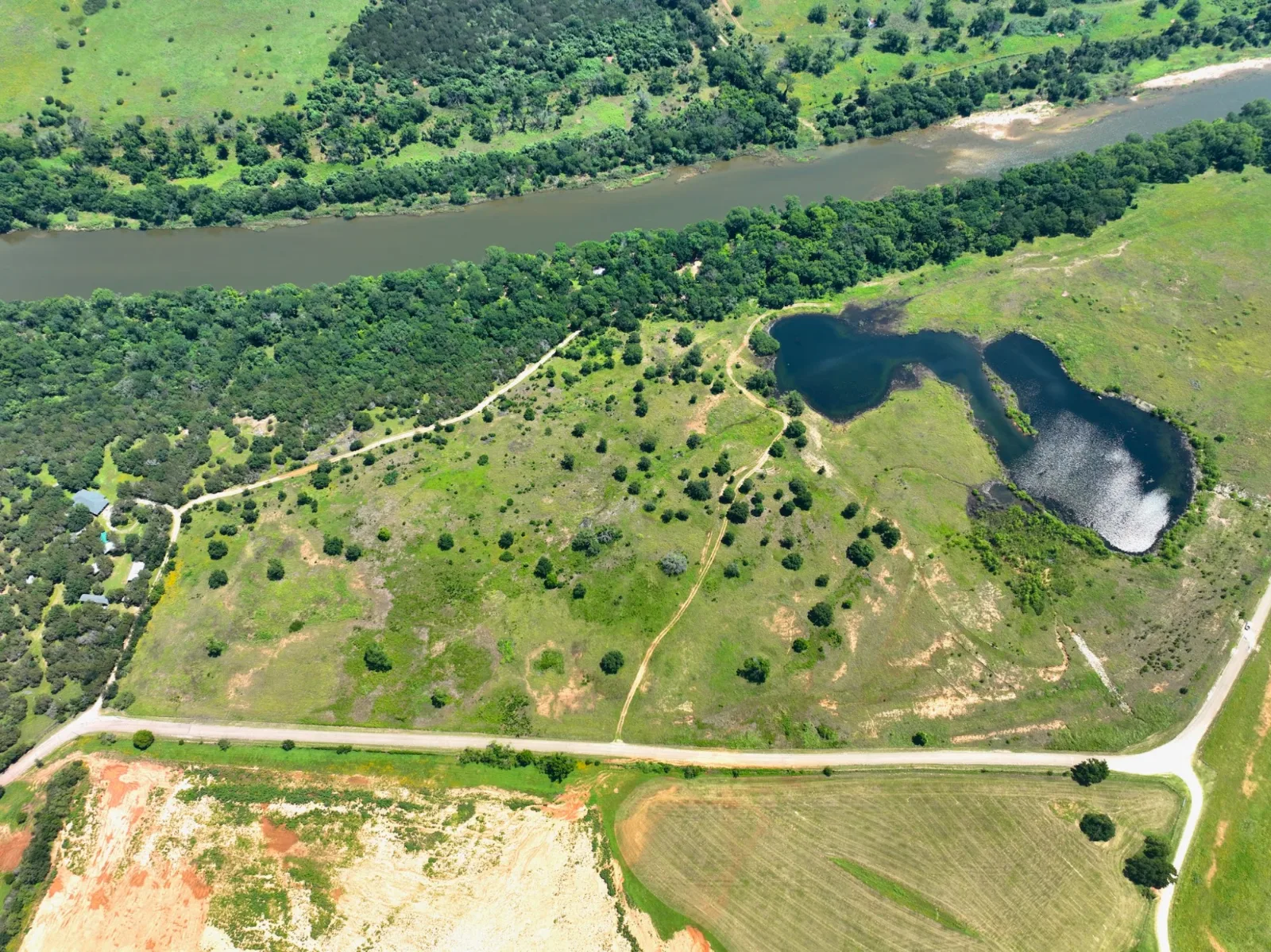
- Shape of the land. A natural draw lets a short dam hold a lot of water.
- Evaporation. In an extreme summer, a Texas pond can lose up to about an inch a day, so depth matters.
- Location. Keep the pond away from the septic field, the well, and property lines.
Ask the USDA Natural Resources Conservation Service (NRCS) county office for the county soil survey before you dig. It shows clay content and depth to rock for most Texas tracts.
Do You Need a Permit to Build a Pond in Texas?
Usually not, for a small stock tank. Texas Water Code Section 11.142 lets a person build a dam or reservoir on their own property to impound up to 200 acre-feet of water for domestic and livestock purposes without a permit from the Texas Commission on Environmental Quality. Larger ponds, or ponds used for irrigation or business, may need a water right.
Other rules can still apply:
- Dam safety. Large dams may fall under TCEQ dam safety rules based on height and storage.
- Floodplain. Work in a mapped floodplain may need a county floodplain permit.
- Waters of the U.S. Damming a creek that carries water to other streams can require federal review; ask NRCS or a pond engineer.
- Downstream neighbors. Texas Water Code Section 11.086 prohibits diverting or impounding surface water in a way that damages neighbors' property.
How Do You Build a Farm Pond Step by Step?
Building a farm pond in Texas follows six steps: test the soil, plan the dam and spillway, clear the site, dig and compact the dam in layers, build the spillway, and let rain fill the pond while grass establishes on the dam. Most stock tanks are built in the dry season so equipment can work.
- Test the soil. Dig test holes or ask NRCS to check clay content at the dam and pool.
- Plan the layout. Set the water level, dam height, side slopes, and a spillway that carries overflow around the dam.
- Clear the site. Remove brush, trees, roots, and topsoil from the dam footprint.
- Build a core trench and dam. Cut a trench under the dam, fill it with clay, and build the dam in compacted lifts.
- Build the spillway. An emergency spillway on solid ground keeps floods from washing out the dam.
- Seed and fill. Grass the dam to stop erosion, and let runoff fill the pond.
How Much Does It Cost to Build a Pond in Texas?
Building a farm pond in Texas usually costs several thousand to tens of thousands of dollars, mostly for excavation time. HomeGuide's 2026 pond cost guide puts a 1-acre pond at about $3,000 to $15,000 and a typical farm pond at $3,000 to $23,000, with larger lakes costing less per acre.
| Cost factor | What raises the price | What lowers it |
|---|
| Size and depth | More cubic yards of dirt moved | A natural draw with a short dam |
| Soil | Sandy soil needing bentonite or a liner | Clay on site |
| Clearing | Dense cedar and trees | Open pasture |
| Access | Remote site, long equipment haul | Good road access |
| Spillway and pipes | Concrete or pipe outlets | Grassed emergency spillway |
Get two or three quotes from pond builders who show you finished ponds in your county. NRCS programs sometimes share the cost of livestock water projects for qualifying agricultural operations, so ask the county office.
Does a Pond Help With an Ag or Wildlife Valuation?
A pond can support an agricultural or wildlife valuation, because it provides water for livestock or wildlife, but a pond alone does not qualify land. Under Texas Tax Code Section 23.51, land must be used primarily for agriculture or wildlife management to the degree common in the area, and a pond is one tool in that plan.
For a wildlife valuation, “providing supplemental water” is one of the seven practices Texas Parks and Wildlife lists. La Tierra's guides to the ag exemption and the wildlife exemption explain the rules, and the free ag exemption guide lists county contacts.
How Do You Maintain a Texas Stock Tank?
Maintain a Texas stock tank by keeping trees and brush off the dam, repairing erosion and animal burrows, controlling aquatic weeds, and keeping livestock from trampling the banks. Texas A&M AgriLife Extension county agents can help with weed identification and fish stocking.
- Dam. Mow the dam and remove woody plants, whose roots can cause leaks.
- Weeds. Identify aquatic plants before treating them; some herbicides have use limits near livestock water.
- Fish. Common stocking combinations in Texas include largemouth bass, bluegill, and channel catfish.
- Drought. Expect low water in summer; deeper ponds hold up better.
Where Can You Buy Land for a Pond Near Austin?
Land for a pond near Austin works best at 5 acres or more, with clay soil and a natural low area. La Tierra Realty's unrestricted tracts include Eagle Ranch near Luling, with 10 to 12 acre lots from $209,000, and Tenney Creek Ranch near Dale, with about 11.5 to 12.4 acre lots from $229,600.
Owner financing through Stonebridge Purchasing leaves cash for dirt work. Read La Tierra's guide to waterfront land in Central Texas for tracts that already border water, and see every lot on the available properties page.
Find Room for a Stock Tank
La Tierra Realty's surveyed, unrestricted tracts across Central and North Texas give you room for a pond, pasture, and a home, with owner financing through Stonebridge Purchasing. Call (512) 980-1719. Atención en español.
Browse Texas Land
Download the Free Ag Exemption Guide
Sources: Texas Water Code §§11.086, 11.142 (2026); Farm Credit Bank of Texas, “Want Water? Tips for Building a Pond,” Landscapes (2008); HomeGuide, How Much Does It Cost to Build a Pond? (2026); USDA Natural Resources Conservation Service, Ponds: Planning, Design, Construction, Agriculture Handbook 590 (2026); Texas Parks and Wildlife Department, wildlife management practices (2026); Texas Tax Code §23.51 (2026).
Frequently Asked Questions
How deep should a pond be in Texas?
Most Texas farm ponds are built with part of the pond at least 8 to 12 feet deep, so water survives summer evaporation and fish have cool water. Shallow edges grow weeds, so builders often slope the banks steeply. The right depth depends on watershed, soil, and use, so ask an NRCS planner or pond builder.
How long does it take a new pond to fill in Texas?
A new Texas pond can fill in a single heavy rain or take a year or more, depending on watershed size, rainfall, and soil. Ponds built in summer often wait until fall or spring storms. Some owners pump from a well to start a pond, which adds cost and may require checking groundwater district rules.
Can I build a pond on a creek in Texas?
You can build a stock tank on a creek on your own land for livestock and domestic use within the 200 acre-foot limit of Texas Water Code Section 11.142, but damming a flowing stream can raise state and federal questions about downstream water rights and wetlands. Talk to NRCS or a pond engineer before damming a creek.
Will a pond raise my property taxes?
A pond is part of the land and can add to market value, but under an agricultural or wildlife valuation the land is taxed on productivity value, so a pond used for livestock or wildlife water usually does not raise taxes much. Check with your county appraisal district.
Can I build a pond on a 5-acre tract?
Yes, if the soil holds water and enough land drains to the site, though the pond will usually be small, often a quarter acre or less. Plan it around the house, well, and septic setbacks. Some small-tract owners fill a lined pond with well or rain water instead of relying on runoff.
This article is general information for Texas landowners and is not engineering or legal advice. Pond design, dam safety, and water rights depend on the site; consult NRCS, a licensed engineer, or a qualified pond builder before construction.
Para construir un estanque en Texas, escoja un lugar bajo con suelo de arcilla que retenga el agua, asegúrese de que suficiente terreno escurra hacia él, diseñe una cortina de tierra compactada con vertedor y contrate a un constructor de estanques con experiencia y con excavadora o buldócer. La ley de Texas permite que un dueño construya en su propio terreno un estanque (stock tank) de hasta 200 acres-pie para ganado y uso doméstico sin permiso estatal de agua.
La Tierra Realty es una empresa de terrenos con sede en Austin que vende terrenos deslindados y sin restricciones en el centro y norte de Texas con financiamiento del dueño a través de Stonebridge Purchasing (NMLS #2349261). Un estanque, llamado stock tank en Texas, es una de las características más pedidas en terreno rural. Las secciones de abajo cubren la elección del sitio, la regla de derechos de agua, el diseño, los costos y el mantenimiento.
¿Qué Hace un Buen Sitio para Estanque en Texas?
Un buen sitio para estanque en Texas tiene suelo rico en arcilla que sella el fondo, una cañada o área baja donde se junta el escurrimiento y suficiente cuenca para rellenar el estanque después de temporadas secas. El Farm Credit Bank of Texas cita como regla práctica unos 75 acres de cuenca por cada acre de superficie del estanque.
- Suelo. La arcilla retiene el agua; los suelos arenosos o con piedra se filtran y pueden necesitar bentonita o una membrana, lo que sube el costo.
- Cuenca. Con poca área de escurrimiento el estanque se queda bajo; con demasiada, el vertedor debe soportar crecidas grandes.
- Forma del terreno. Una cañada natural permite que una cortina corta retenga mucha agua.
- Evaporación. En un verano extremo, un estanque en Texas puede perder hasta cerca de una pulgada al día, así que la profundidad importa.
- Ubicación. Mantenga el estanque lejos del campo de séptica, del pozo y de las líneas de propiedad.
Pida a la oficina de condado del Servicio de Conservación de Recursos Naturales del USDA (NRCS) el estudio de suelos del condado antes de excavar. Muestra el contenido de arcilla y la profundidad a la roca en la mayoría de los terrenos de Texas.
¿Se Necesita Permiso para Construir un Estanque en Texas?
Normalmente no, para un stock tank chico. La Sección 11.142 del Código de Aguas de Texas permite construir una presa o depósito en su propiedad para retener hasta 200 acres-pie de agua para uso doméstico y ganadero sin permiso de la Comisión de Calidad Ambiental de Texas. Los estanques más grandes, o los que se usan para riego o negocio, pueden necesitar un derecho de agua.
Otras reglas pueden aplicar de todos modos:
- Seguridad de presas. Las presas grandes pueden caer bajo las reglas de seguridad de presas de TCEQ según su altura y almacenamiento.
- Zona de inundación. El trabajo en una zona de inundación mapeada puede requerir un permiso del condado.
- Aguas federales. Represar un arroyo que lleva agua a otras corrientes puede requerir revisión federal; pregunte a NRCS o a un ingeniero de estanques.
- Vecinos río abajo. La Sección 11.086 del Código de Aguas de Texas prohíbe desviar o retener agua superficial de forma que dañe la propiedad de los vecinos.
¿Cómo Se Construye un Estanque de Rancho Paso a Paso?
Construir un estanque de rancho en Texas sigue seis pasos: probar el suelo, planear la cortina y el vertedor, limpiar el sitio, excavar y compactar la cortina por capas, construir el vertedor y dejar que la lluvia llene el estanque mientras crece el pasto en la cortina. La mayoría de los stock tanks se construye en temporada seca para que la maquinaria pueda trabajar.
- Pruebe el suelo. Haga pozos de prueba o pida a NRCS que revise el contenido de arcilla en la cortina y el vaso.
- Planee el diseño. Fije el nivel del agua, la altura de la cortina, los taludes y un vertedor que lleve el excedente alrededor de la cortina.
- Limpie el sitio. Quite monte, árboles, raíces y la capa superficial del área de la cortina.
- Construya la zanja central y la cortina. Abra una zanja bajo la cortina, rellénela con arcilla y levante la cortina en capas compactadas.
- Construya el vertedor. Un vertedor de emergencia en terreno firme evita que las crecidas rompan la cortina.
- Siembre y llene. Ponga pasto en la cortina para frenar la erosión y deje que el escurrimiento llene el estanque.
¿Cuánto Cuesta Construir un Estanque en Texas?
Construir un estanque de rancho en Texas normalmente cuesta desde varios miles hasta decenas de miles de dólares, sobre todo por las horas de excavación. La guía de costos 2026 de HomeGuide calcula unos $3,000 a $15,000 por un estanque de 1 acre y de $3,000 a $23,000 por un estanque de rancho típico, y los lagos más grandes cuestan menos por acre.
| Factor de costo | Qué sube el precio | Qué lo baja |
|---|
| Tamaño y profundidad | Más yardas cúbicas de tierra movida | Una cañada natural con cortina corta |
| Suelo | Suelo arenoso que necesita bentonita o membrana | Arcilla en el sitio |
| Limpieza | Cedro y árboles densos | Potrero abierto |
| Acceso | Sitio lejano, traslado largo de maquinaria | Buen acceso por camino |
| Vertedor y tubos | Salidas de concreto o tubería | Vertedor de emergencia con pasto |
Pida dos o tres cotizaciones a constructores de estanques que le muestren estanques terminados en su condado. Los programas de NRCS a veces comparten el costo de proyectos de agua para ganado en operaciones agrícolas que califican, así que pregunte en la oficina del condado.
¿Un Estanque Ayuda con la Valuación Agrícola o de Vida Silvestre?
Un estanque puede apoyar una valuación agrícola o de vida silvestre, porque da agua al ganado o a la fauna, pero un estanque solo no hace que el terreno califique. Según la Sección 23.51 del Código Fiscal de Texas, el terreno debe usarse principalmente para agricultura o manejo de vida silvestre al grado común en la zona, y el estanque es una herramienta dentro de ese plan.
Para la valuación de vida silvestre, “proveer agua suplementaria” es una de las siete prácticas que enlista Texas Parks and Wildlife. Las guías de La Tierra sobre la exención agrícola y la exención de vida silvestre explican las reglas, y la guía gratuita de exención agrícola enlista los contactos por condado.
¿Cómo Se Mantiene un Stock Tank en Texas?
Mantenga un stock tank en Texas sin árboles ni monte en la cortina, reparando la erosión y las madrigueras, controlando las plantas acuáticas y evitando que el ganado pisotee las orillas. Los agentes de condado de Texas A&M AgriLife Extension pueden ayudar a identificar plantas y a sembrar peces.
- Cortina. Corte el pasto de la cortina y quite las plantas leñosas, cuyas raíces pueden causar filtraciones.
- Plantas acuáticas. Identifíquelas antes de tratarlas; algunos herbicidas tienen límites de uso cerca del agua del ganado.
- Peces. Las combinaciones comunes en Texas incluyen lobina negra, mojarra de agallas azules y bagre de canal.
- Sequía. Espere niveles bajos en verano; los estanques más profundos aguantan mejor.
¿Dónde Se Puede Comprar Terreno para un Estanque Cerca de Austin?
El terreno para un estanque cerca de Austin funciona mejor desde 5 acres, con suelo de arcilla y un área baja natural. Los terrenos sin restricciones de La Tierra Realty incluyen Eagle Ranch cerca de Luling, con lotes de 10 a 12 acres desde $209,000, y Tenney Creek Ranch cerca de Dale, con lotes de unos 11.5 a 12.4 acres desde $229,600.
El financiamiento del dueño a través de Stonebridge Purchasing le deja efectivo para el movimiento de tierra. Lea la guía de La Tierra sobre terreno con agua en el centro de Texas para terrenos que ya colindan con agua, y vea cada lote en la página de propiedades disponibles.
Encuentre Espacio para un Stock Tank
Los terrenos deslindados y sin restricciones de La Tierra Realty en el centro y norte de Texas le dan espacio para un estanque, potrero y casa, con financiamiento del dueño a través de Stonebridge Purchasing. Llame al (512) 980-1719. Atención en español.
Ver Terrenos en Texas
Descargue la Guía Gratuita de Exención Agrícola
Fuentes: Código de Aguas de Texas §§11.086, 11.142 (2026); Farm Credit Bank of Texas, “Want Water? Tips for Building a Pond”, Landscapes (2008); HomeGuide, costo de construir un estanque (2026); Servicio de Conservación de Recursos Naturales del USDA, Ponds: Planning, Design, Construction, Manual Agrícola 590 (2026); Texas Parks and Wildlife Department, prácticas de manejo de vida silvestre (2026); Código Fiscal de Texas §23.51 (2026).
Preguntas Frecuentes
¿Qué tan profundo debe ser un estanque en Texas?
La mayoría de los estanques de rancho en Texas se construyen con una parte de al menos 8 a 12 pies de profundidad, para que el agua aguante la evaporación del verano y los peces tengan agua fresca. Las orillas poco profundas crían plantas, así que los constructores muchas veces hacen los taludes empinados. La profundidad correcta depende de la cuenca, el suelo y el uso; pregunte a un planeador de NRCS o a un constructor de estanques.
¿Cuánto tarda en llenarse un estanque nuevo en Texas?
Un estanque nuevo en Texas puede llenarse con una sola lluvia fuerte o tardar un año o más, según el tamaño de la cuenca, la lluvia y el suelo. Los estanques construidos en verano muchas veces esperan las tormentas de otoño o primavera. Algunos dueños bombean desde un pozo para iniciar el estanque, lo que suma costo y puede requerir revisar las reglas del distrito de agua subterránea.
¿Puedo construir un estanque en un arroyo en Texas?
Puede construir un stock tank en un arroyo dentro de su terreno para ganado y uso doméstico dentro del límite de 200 acres-pie de la Sección 11.142 del Código de Aguas de Texas, pero represar una corriente con flujo puede plantear dudas estatales y federales sobre derechos de agua río abajo y humedales. Hable con NRCS o con un ingeniero de estanques antes de represar un arroyo.
¿Un estanque sube mi impuesto predial?
Un estanque es parte del terreno y puede sumar valor de mercado, pero con valuación agrícola o de vida silvestre el terreno paga según su valor de productividad, así que un estanque usado como agua para ganado o fauna normalmente no sube mucho el impuesto. Consulte con el distrito de avalúo de su condado.
¿Puedo construir un estanque en un terreno de 5 acres?
Sí, si el suelo retiene agua y suficiente terreno escurre hacia el sitio, aunque el estanque normalmente será chico, muchas veces de un cuarto de acre o menos. Planéelo alrededor de las distancias de la casa, el pozo y la séptica. Algunos dueños de terrenos chicos llenan un estanque con membrana usando agua de pozo o de lluvia en lugar de depender del escurrimiento.
Este artículo es información general para dueños de terreno en Texas y no constituye asesoría de ingeniería ni legal. El diseño del estanque, la seguridad de la presa y los derechos de agua dependen del sitio; consulte a NRCS, a un ingeniero con licencia o a un constructor de estanques calificado antes de construir.