Property Taxes·7 min read·Published November 2026
Raw land in Texas is taxed at market value times local rates, about 1.2% to 2% in most rural areas. Here is how the bill is figured, when it is due, and how an ag valuation lowers it.
The Texas property tax rate averages about 1.25 percent of a home's value, ninth highest in the U.S., according to a 2026 Construction Coverage analysis of Census data reported by Fox 4. Texas has no state property tax; school districts, counties, cities, and special districts each set a rate per $100 of value, and combined rates on rural land often run about 1.2 to 2 percent before any agricultural valuation.
La Tierra Realty is an Austin-based land company that sells surveyed, unrestricted acreage in Central and North Texas with owner financing through Stonebridge Purchasing (NMLS #2349261). The sections below explain how the Texas property tax rate is built, how raw land is taxed, what an ag valuation does, the yearly calendar, and how to estimate the tax on a tract before you buy.
What Is the Property Tax Rate in Texas?
The Texas property tax rate is the sum of the rates set by every local taxing unit where a property sits, stated in dollars per $100 of taxable value. A rate of $1.80 per $100 means $1,800 a year on $100,000 of taxable value. Statewide, the effective rate on owner-occupied homes was about 1.245 percent, compared with 0.888 percent nationally.
Texas relies on property taxes because it has no state income tax. According to Texas Comptroller data compiled by the Texas Policy Research center, local property tax levies across Texas reached $89.4 billion in 2025. School districts collect the largest share, followed by cities, counties, and special districts.
| Taxing unit | What it funds | Typical share of a rural bill |
|---|
| School district | Public schools (maintenance and operations, debt) | Largest share |
| County | Roads, sheriff, courts | Second largest |
| Emergency services district (ESD) | Volunteer fire and EMS | Small |
| Hospital or water district | Local hospital, groundwater, or road district | Varies; not in every area |
| City | City services | Only inside city limits |
Rural tracts outside city limits skip the city rate, which is one reason acreage often carries a lower combined rate than a house in town.
How Is Raw Land Taxed in Texas?
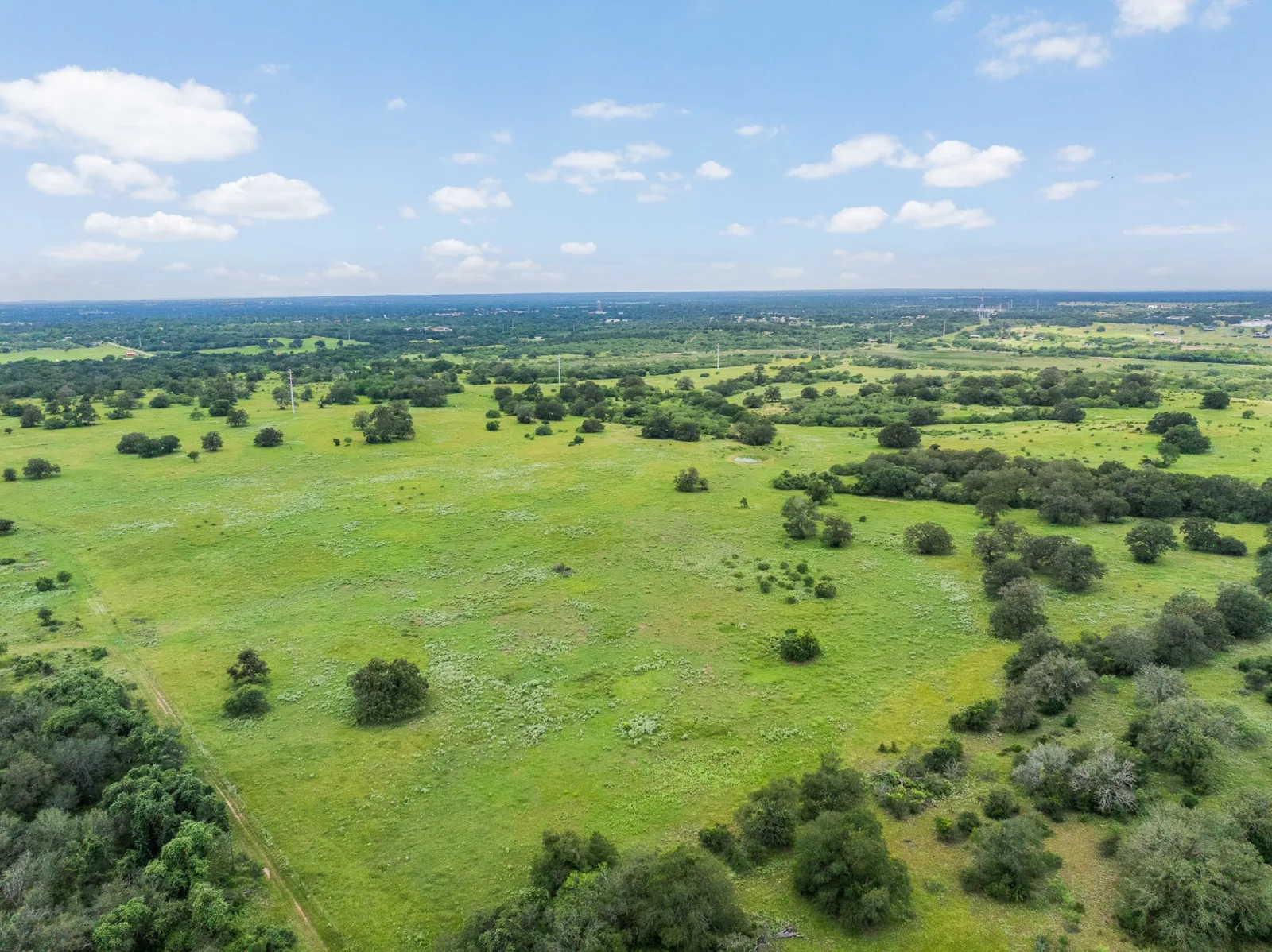
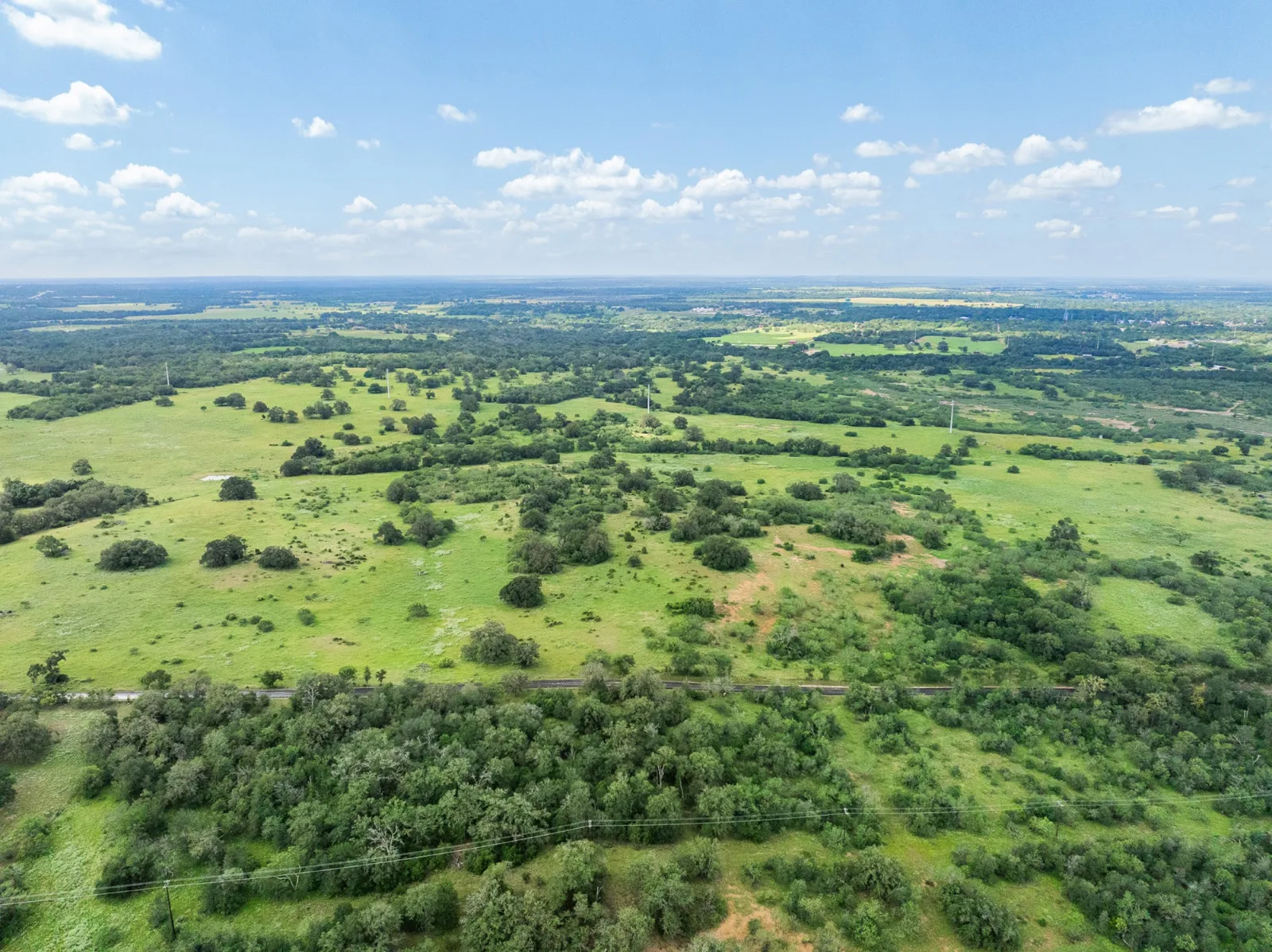
Raw land in Texas is taxed at its market value as of January 1, multiplied by the combined rate of the taxing units where it sits, unless the owner qualifies for an agricultural, wildlife, or timber valuation. Vacant land does not qualify for the residence homestead exemption, because Tax Code Section 11.13 requires an occupied home.
An example shows the math. A 10-acre tract appraised at $200,000 in a rural area with a combined rate of $2.00 per $100 owes $4,000 a year at market value. The same tract under an agricultural valuation might be taxed on a productivity value of a few thousand dollars, cutting the bill to well under $200. The figures are illustrative; your appraisal district sets the actual values.
La Tierra's homestead exemption guide explains what changes once you build and move in, including the $140,000 school exemption approved by voters in November 2025. Buyers who use La Tierra's owner financing sign a non-homestead affidavit at closing, so ask La Tierra how that affects your property taxes.
How Does an Ag Valuation Lower Property Taxes on Land?
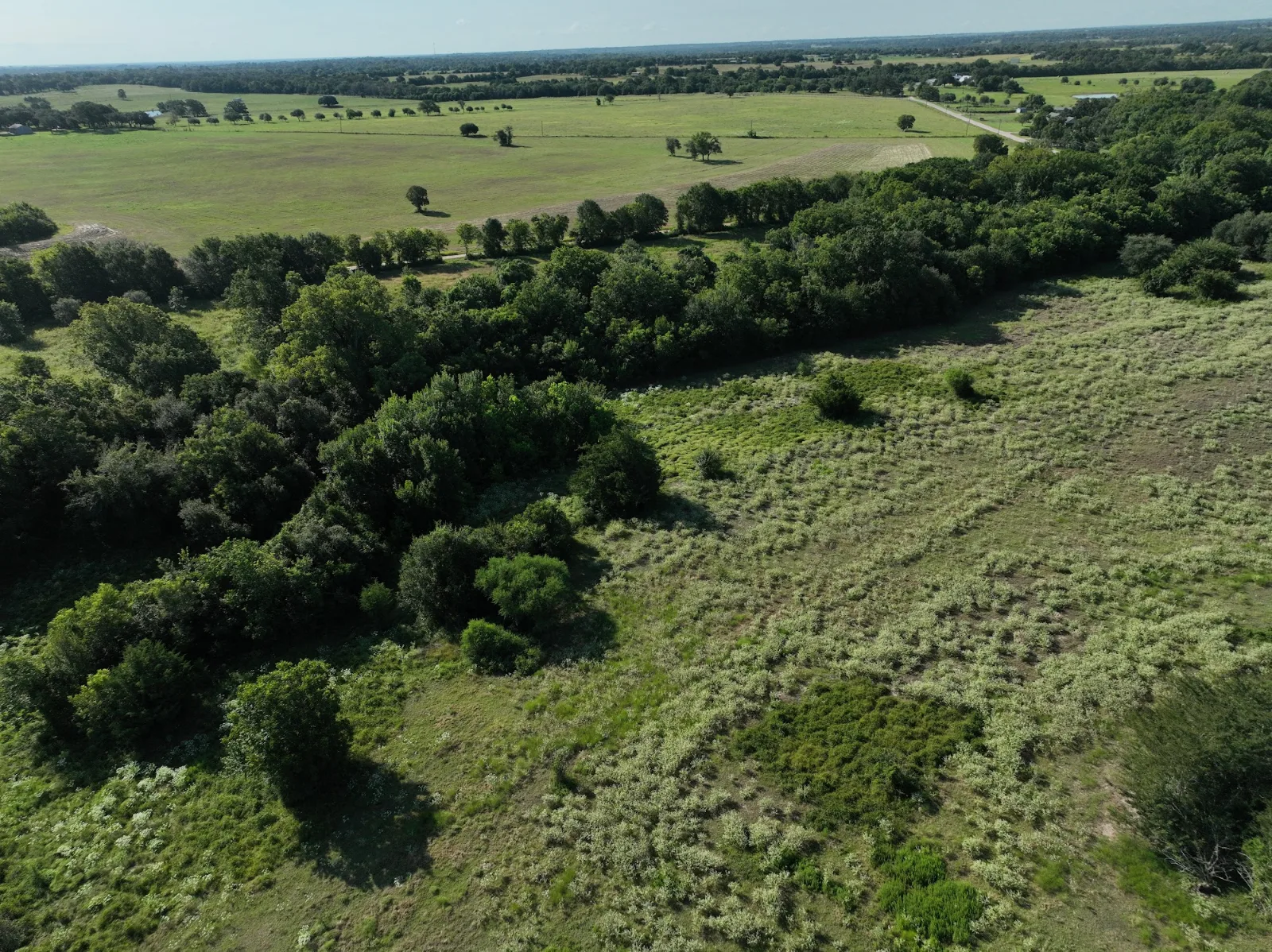
An agricultural valuation lowers property taxes on Texas land by taxing it on what the land can produce, called productivity value, instead of market value. Under Tax Code Sections 23.51 through 23.57, land qualifies when it has been in agricultural use, such as grazing, hay, or beekeeping, for at least five of the preceding seven years.
- Use must be primary. The land's main use must be agriculture to the degree of intensity common in the area.
- Minimums vary. Each appraisal district sets its own acreage and stocking rules; many Central Texas districts start around 10 acres for grazing.
- History carries over. A buyer can often keep a valuation the prior owner held by continuing the use and filing a new application.
- Rollback applies. Changing the land to a non-agricultural use triggers a rollback tax of the difference for the prior three years plus interest.
La Tierra's guides to the ag exemption and the wildlife exemption cover the rules in detail, and the free ag exemption guide lists county contacts.
When Are Texas Property Taxes Due?
Texas property taxes are billed in the fall and due by January 31 of the following year, under Tax Code Section 31.02. Value is set as of January 1, notices of appraised value go out in the spring, and owners have until May 15, or 30 days after the notice is delivered, to protest.
| Date | Step |
|---|
| January 1 | Appraisal date; ownership and use are set for the year |
| April 30 | Deadline for most exemption and ag applications |
| April to May | Notices of appraised value mailed |
| May 15 (or 30 days after notice) | Protest deadline |
| August to September | Taxing units adopt rates |
| October | Tax bills mailed |
| January 31 | Taxes due without penalty |
Buyers who close mid-year usually split the year's taxes with the seller at closing, based on the days each party owns the land.
How Do You Estimate Property Taxes Before You Buy Land?
To estimate property taxes on a tract, look up its current appraised value and taxing units on the county appraisal district website, add the adopted rates of each unit, and multiply. Check whether the land carries an ag valuation, since losing it after a sale can raise the bill sharply and may trigger a rollback.
- Find the property record. Search the appraisal district by owner, address, or property ID.
- List the taxing units. The record shows the school district, county, and special districts.
- Add the rates. Each unit posts its adopted rate per $100; the county tax office often lists them together.
- Check the valuation type. Look for “ag” or “1-d-1” use and the productivity value.
- Ask about rollback. If the seller has an ag valuation, ask whether you will keep the use and who pays any rollback.
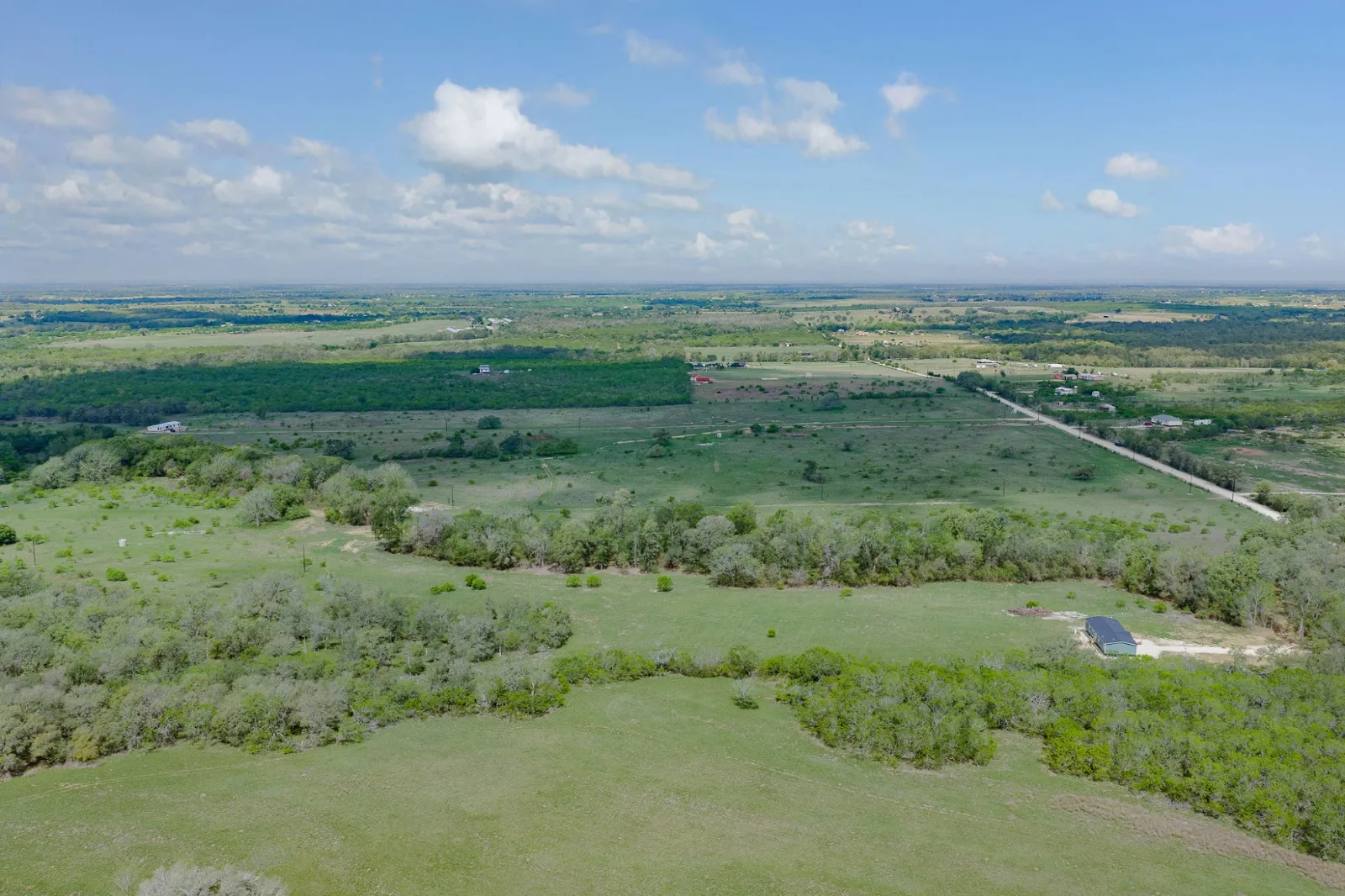
La Tierra Realty tracts in Caldwell, Hood, Johnson, Bosque, Milam, and Washington counties each sit in different taxing units, so ask for the property ID of any lot you like. Compare tracts on the available properties page, and see how owner financing works alongside your tax budget.
Find Land That Fits Your Tax Plan
La Tierra Realty's surveyed, unrestricted tracts across Central and North Texas come with owner financing through Stonebridge Purchasing, and many are large enough to explore an ag valuation. Call (512) 980-1719. Atención en español.
Browse Texas Land
Download the Free Ag Exemption Guide
Sources: Fox 4 News, “Texas ranks 9th highest in US property tax rates” reporting Construction Coverage analysis of U.S. Census Bureau data (February 2026); Texas Policy Research, Texas Property Tax Levies, using Texas Comptroller data (2025); Texas Tax Code §§11.13, 23.51–23.57, 31.02, 41.44 (2026); Texas Comptroller of Public Accounts, Property Tax Assistance (2026).
Frequently Asked Questions
Which Texas counties have the lowest property tax rates?
Combined rates vary by school district and special districts more than by county, so two tracts in the same county can pay different rates. Rural counties with large oil, gas, or industrial tax bases often have lower rates. To compare, look up the adopted rates for each taxing unit on the county appraisal district or tax office website.
Do you pay property taxes on land with no house in Texas?
Yes. Vacant land in Texas is taxed every year at market value as of January 1 unless it qualifies for an agricultural, wildlife, or timber valuation. It cannot receive a residence homestead exemption until an owner occupies a home on it, under Tax Code Section 11.13.
Can I protest the appraised value of my land?
Yes. Texas owners can protest to the appraisal review board by May 15 or within 30 days after the notice of appraised value is delivered, whichever is later, under Tax Code Section 41.44. Bring sales of similar tracts, photos of conditions such as floodplain or poor access, and a survey to support a lower value.
Do I keep the seller's ag exemption when I buy land?
Often, if you keep the land in the same qualifying agricultural use and file your own application with the appraisal district, usually by April 30. The land's prior use history counts toward the five-of-seven-years test. If the use stops, the appraisal district can remove the valuation and charge a rollback tax.
How much are property taxes on 10 acres in Texas?
Property taxes on 10 acres in Texas depend on the appraised value and the combined local rate. At market value, a $200,000 tract at a $2.00 rate owes about $4,000 a year. With an agricultural valuation, the same tract may owe a small fraction of that. Check the appraisal district record for the actual numbers.
This article is general information for Texas property owners and is not tax or legal advice. Rates, exemptions, and deadlines change every year; confirm current figures with the county appraisal district, the county tax office, and the Texas Comptroller.
La tasa del impuesto predial en Texas promedia cerca de 1.25 por ciento del valor de una casa, la novena más alta de EE. UU., según un análisis de 2026 de Construction Coverage con datos del Censo, reportado por Fox 4. Texas no tiene impuesto predial estatal; los distritos escolares, los condados, las ciudades y los distritos especiales fijan cada uno una tasa por cada $100 de valor, y las tasas combinadas en terreno rural muchas veces van de 1.2 a 2 por ciento antes de cualquier valuación agrícola.
La Tierra Realty es una empresa de terrenos con sede en Austin que vende terrenos deslindados y sin restricciones en el centro y norte de Texas con financiamiento del dueño a través de Stonebridge Purchasing (NMLS #2349261). Las secciones de abajo explican cómo se forma la tasa del impuesto predial en Texas, cómo se grava el terreno sin construir, qué hace una valuación agrícola, el calendario anual y cómo estimar el impuesto de un terreno antes de comprar.
¿Cuál Es la Tasa del Impuesto Predial en Texas?
La tasa del impuesto predial en Texas es la suma de las tasas que fija cada unidad fiscal local donde está una propiedad, expresada en dólares por cada $100 de valor gravable. Una tasa de $1.80 por $100 significa $1,800 al año sobre $100,000 de valor gravable. A nivel estatal, la tasa efectiva sobre casas ocupadas por sus dueños fue de cerca de 1.245 por ciento, frente a 0.888 por ciento a nivel nacional.
Texas depende del impuesto predial porque no tiene impuesto estatal sobre el ingreso. Según datos del Contralor de Texas compilados por el centro Texas Policy Research, la recaudación local de impuesto predial en Texas llegó a $89,400 millones en 2025. Los distritos escolares cobran la mayor parte, seguidos por las ciudades, los condados y los distritos especiales.
| Unidad fiscal | Qué financia | Parte típica de un recibo rural |
|---|
| Distrito escolar | Escuelas públicas (operación y deuda) | La mayor parte |
| Condado | Caminos, alguacil, cortes | La segunda mayor |
| Distrito de servicios de emergencia (ESD) | Bomberos voluntarios y ambulancias | Pequeña |
| Distrito de hospital o de agua | Hospital local, agua subterránea o caminos | Varía; no existe en todas las áreas |
| Ciudad | Servicios municipales | Solo dentro de los límites de la ciudad |
Los terrenos rurales fuera de los límites de la ciudad no pagan la tasa municipal, una razón por la que el terreno muchas veces tiene una tasa combinada más baja que una casa en el pueblo.
¿Cómo Se Grava el Terreno Sin Construir en Texas?
El terreno sin construir en Texas se grava según su valor de mercado al 1 de enero, multiplicado por la tasa combinada de las unidades fiscales donde está, salvo que el dueño califique para una valuación agrícola, de vida silvestre o de madera. El terreno vacío no califica para la exención de residencia homestead, porque la Sección 11.13 del Código Fiscal exige una casa ocupada.
Un ejemplo muestra el cálculo. Un terreno de 10 acres avaluado en $200,000 en un área rural con una tasa combinada de $2.00 por $100 paga $4,000 al año a valor de mercado. El mismo terreno con valuación agrícola podría gravarse sobre un valor de productividad de unos miles de dólares, lo que bajaría el recibo a mucho menos de $200. Las cifras son ilustrativas; su distrito de avalúo fija los valores reales.
La guía de exención de homestead de La Tierra explica qué cambia cuando construye y se muda, incluida la exención escolar de $140,000 aprobada por los votantes en noviembre de 2025. Quienes usan el financiamiento del dueño de La Tierra firman una declaración jurada de no homestead al cierre, así que pregunte a La Tierra cómo afecta su impuesto predial.
¿Cómo Baja la Valuación Agrícola el Impuesto Predial del Terreno?
Una valuación agrícola baja el impuesto predial del terreno en Texas al gravarlo según lo que el terreno puede producir, llamado valor de productividad, en lugar del valor de mercado. Según las Secciones 23.51 a 23.57 del Código Fiscal, el terreno califica cuando ha estado en uso agrícola, como pastoreo, heno o apicultura, al menos cinco de los siete años anteriores.
- El uso debe ser principal. El uso principal del terreno debe ser agrícola con la intensidad común en la zona.
- Los mínimos varían. Cada distrito de avalúo fija sus propias reglas de acres y carga animal; muchos distritos del centro de Texas empiezan alrededor de 10 acres para pastoreo.
- El historial se conserva. Un comprador muchas veces puede conservar la valuación del dueño anterior si continúa el uso y presenta una nueva solicitud.
- Aplica el rollback. Cambiar el terreno a un uso no agrícola genera un impuesto de recuperación (rollback) por la diferencia de los tres años anteriores más intereses.
Las guías de La Tierra sobre la exención agrícola y la exención de vida silvestre cubren las reglas a detalle, y la guía gratuita de exención agrícola enlista los contactos por condado.
¿Cuándo Se Paga el Impuesto Predial en Texas?
El impuesto predial en Texas se cobra en otoño y vence el 31 de enero del año siguiente, según la Sección 31.02 del Código Fiscal. El valor se fija al 1 de enero, los avisos de valor avaluado se mandan en primavera y los dueños tienen hasta el 15 de mayo, o 30 días después de recibir el aviso, para protestar.
| Fecha | Paso |
|---|
| 1 de enero | Fecha de avalúo; se fijan el dueño y el uso del año |
| 30 de abril | Fecha límite de la mayoría de las solicitudes de exención y valuación agrícola |
| Abril a mayo | Se envían los avisos de valor avaluado |
| 15 de mayo (o 30 días después del aviso) | Fecha límite de protesta |
| Agosto a septiembre | Las unidades fiscales adoptan sus tasas |
| Octubre | Se envían los recibos |
| 31 de enero | Vence el pago sin multa |
Quien cierra a mitad de año normalmente divide los impuestos del año con el vendedor al cierre, según los días que cada uno es dueño del terreno.
¿Cómo Se Estima el Impuesto Predial Antes de Comprar Terreno?
Para estimar el impuesto predial de un terreno, busque su valor avaluado actual y sus unidades fiscales en el sitio web del distrito de avalúo del condado, sume las tasas adoptadas de cada unidad y multiplique. Revise si el terreno tiene valuación agrícola, porque perderla después de una venta puede subir mucho el recibo y generar un rollback.
- Busque la ficha de la propiedad. Busque en el distrito de avalúo por dueño, dirección o número de propiedad.
- Enliste las unidades fiscales. La ficha muestra el distrito escolar, el condado y los distritos especiales.
- Sume las tasas. Cada unidad publica su tasa adoptada por $100; la oficina de impuestos del condado muchas veces las enlista juntas.
- Revise el tipo de valuación. Busque el uso “ag” o “1-d-1” y el valor de productividad.
- Pregunte por el rollback. Si el vendedor tiene valuación agrícola, pregunte si usted conservará el uso y quién paga cualquier rollback.
Los terrenos de La Tierra Realty en los condados de Caldwell, Hood, Johnson, Bosque, Milam y Washington están en distintas unidades fiscales, así que pida el número de propiedad de cualquier lote que le guste. Compare terrenos en la página de propiedades disponibles y vea cómo funciona el financiamiento del dueño junto con su presupuesto de impuestos.
Encuentre Terreno Que Se Ajuste a Su Plan de Impuestos
Los terrenos deslindados y sin restricciones de La Tierra Realty en el centro y norte de Texas vienen con financiamiento del dueño a través de Stonebridge Purchasing, y muchos son lo bastante grandes para explorar una valuación agrícola. Llame al (512) 980-1719. Atención en español.
Ver Terrenos en Texas
Descargue la Guía Gratuita de Exención Agrícola
Fuentes: Fox 4 News, “Texas ranks 9th highest in US property tax rates”, con el análisis de Construction Coverage de datos de la Oficina del Censo de EE. UU. (febrero 2026); Texas Policy Research, recaudación de impuesto predial en Texas con datos del Contralor de Texas (2025); Código Fiscal de Texas §§11.13, 23.51–23.57, 31.02, 41.44 (2026); Contralor de Cuentas Públicas de Texas, Asistencia de Impuesto Predial (2026).
Preguntas Frecuentes
¿Qué condados de Texas tienen las tasas de impuesto predial más bajas?
Las tasas combinadas varían más por distrito escolar y distritos especiales que por condado, así que dos terrenos en el mismo condado pueden pagar tasas distintas. Los condados rurales con una base fiscal grande de petróleo, gas o industria muchas veces tienen tasas más bajas. Para comparar, busque las tasas adoptadas de cada unidad fiscal en el sitio del distrito de avalúo o de la oficina de impuestos del condado.
¿Se paga impuesto predial por terreno sin casa en Texas?
Sí. El terreno vacío en Texas paga impuesto cada año según su valor de mercado al 1 de enero, salvo que califique para valuación agrícola, de vida silvestre o de madera. No puede recibir la exención de residencia homestead hasta que un dueño ocupe una casa en él, según la Sección 11.13 del Código Fiscal.
¿Puedo protestar el valor avaluado de mi terreno?
Sí. Los dueños en Texas pueden protestar ante la junta de revisión de avalúos a más tardar el 15 de mayo o dentro de los 30 días después de recibir el aviso de valor avaluado, lo que sea más tarde, según la Sección 41.44 del Código Fiscal. Lleve ventas de terrenos parecidos, fotos de condiciones como zona de inundación o mal acceso y un deslinde para respaldar un valor más bajo.
¿Conservo la exención agrícola del vendedor cuando compro terreno?
Muchas veces sí, si mantiene el terreno en el mismo uso agrícola calificado y presenta su propia solicitud ante el distrito de avalúo, normalmente antes del 30 de abril. El historial de uso del terreno cuenta para la prueba de cinco de siete años. Si el uso se detiene, el distrito de avalúo puede quitar la valuación y cobrar un rollback.
¿Cuánto es el impuesto predial de 10 acres en Texas?
El impuesto predial de 10 acres en Texas depende del valor avaluado y de la tasa local combinada. A valor de mercado, un terreno de $200,000 con tasa de $2.00 paga unos $4,000 al año. Con valuación agrícola, el mismo terreno puede pagar una pequeña fracción de eso. Revise la ficha del distrito de avalúo para ver los números reales.
Este artículo es información general para dueños de propiedad en Texas y no constituye asesoría fiscal ni legal. Las tasas, las exenciones y las fechas límite cambian cada año; confirme las cifras vigentes con el distrito de avalúo del condado, la oficina de impuestos del condado y el Contralor de Texas.