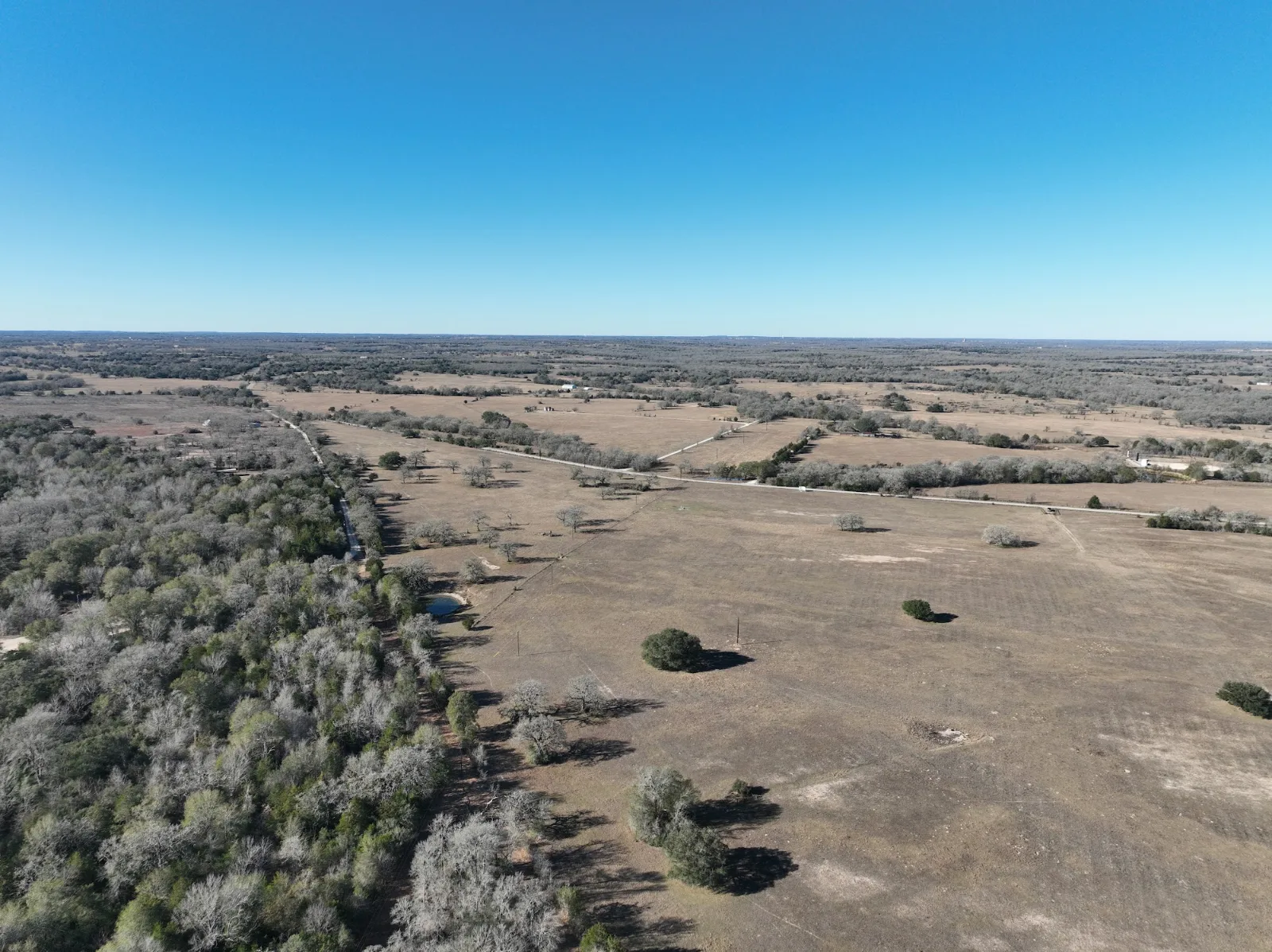
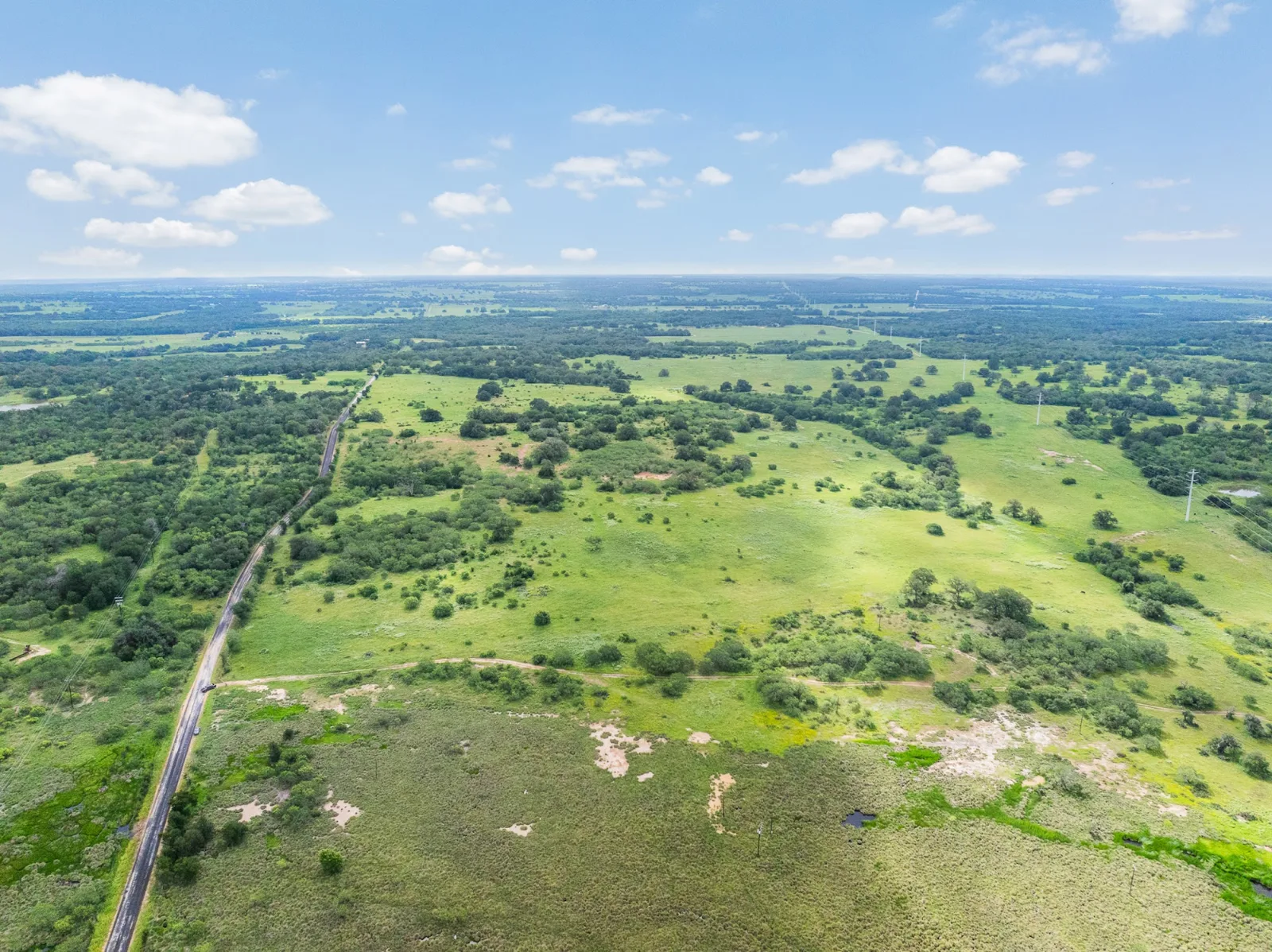
Texas lets you live on your own land with only a few approvals. Here is what the law requires for an RV, a septic system, a well, and an off-grid build on 2 to 25 acres.
Homesteading in Texas on small acreage is legal and practical on 2 to 25 acres of unrestricted land in an unincorporated county. Texas has no county-enforced building code for rural homes, no state ban on living in an RV on your own land, and a 10-acre septic permit exemption. The county septic permit and floodplain rules are the main approvals you need.
Homesteading here means self-reliant living on your own land: a house or RV, a well, a garden, and a few animals. The sections below cover whether you can live on land without a house, what building code applies, the TCEQ septic rules, water, acreage, and going off grid. La Tierra Realty is an Austin-based land company that sells surveyed, unrestricted 2 to 15 acre tracts in Central and North Texas with owner financing through Stonebridge Purchasing (NMLS #2349261), and most of its tracts allow RVs, manufactured homes, barndominiums, and livestock.
Can You Live on Land Without a House in Texas?
Yes. Texas has no statewide law that bans living in an RV, camper, or tiny home on land you own, and most unincorporated county land has no zoning. Counties get land-use power only from specific statutes, and Local Government Code Chapter 231 grants zoning to a short list of counties, such as Hood County under its Subchapter K development rules.
Bexar County's 2026 permit FAQ shows how narrow county authority is: the county draws its permit power from Local Government Code Chapter 233, Subchapter C, and requires a permit only when someone builds a structure “to be used for commercial, public accessible, or multi-family residential purposes.” A single-family home, an RV, or a barn on private land falls outside that list in most Texas counties.
Three rules still apply everywhere:
- Sewage. Wastewater must go into a permitted septic system or a licensed pump-out service, because dumping it on the ground violates Texas Health and Safety Code Chapter 366.
- Floodplain. Construction in a mapped floodplain needs a county floodplain development permit.
- Deed restrictions. Private covenants can ban RVs or set minimum house sizes, which is why buyers who plan to camp on the land first choose unrestricted land.
Does Texas Have a Building Code for Rural Land?
Texas has no county-enforced general building code in unincorporated areas. Local Government Code §233.153 states that new homes outside city limits must follow “the version of the International Residential Code published as of May 1, 2008,” but counties do not inspect, and the same section bars a county from charging a fee to enforce it.
Inspection is the builder's job. Under Local Government Code §233.154, the builder hires “a licensed engineer,” “a registered architect,” “a professional inspector licensed by the Texas Real Estate Commission,” or a code-council-certified inspector, and files a notice with the county before construction and within 10 days after the final inspection. The rule covers site-built houses and duplexes on vacant lots.
Manufactured homes are excluded. Local Government Code §233.151 leaves out homes built under Texas Occupations Code Chapter 1201, which the Texas Department of Housing and Community Affairs regulates through its Statement of Ownership system. Some counties add their own development permits: Caldwell County's Sanitation and Development Services office lists residential construction permits, septic permits, and floodplain permits on its 2026 permit page, with an intake meeting required before applying.
What Are the TCEQ Septic Rules for a Homestead?
TCEQ rules in 30 TAC Chapter 285 require a permit for every on-site sewage facility, issued by the county or another local authorized agent. Health and Safety Code §366.052 exempts a single residence on a tract of 10 acres or larger when no field line sits within 100 feet of the property line and effluent stays on the tract.
The Texas Commission on Environmental Quality states the rule plainly: “A permit is required to construct, install, alter, extend, or repair an OSSF.” The permitting authority has 30 days to approve or deny the application, according to TCEQ's 2026 permit page, and a licensed site evaluator or professional engineer must test the soil first.
The 10-acre exemption has conditions beyond acreage. TCEQ lists them: a site evaluation by a licensed evaluator or engineer, all parts of the system at least 100 feet from every property line, effluent disposed on the property, only one dwelling on the tract, and no nuisance or groundwater pollution. Many buyers on 10-acre tracts still pull the permit, because a future lender or buyer will ask for it. For 2026 installation costs, see La Tierra's guide to well, septic, and internet costs on rural land.
Where Does Water Come From on a Texas Homestead?
Water on a Texas homestead comes from a private well, a community water system, or rainwater. Texas follows the rule of capture, which Texas A&M AgriLife Extension's 2018 water law guide says “provides that a landowner has the right to pump water from beneath his or her property, even at the expense of his or her neighbor.”
Groundwater conservation districts add a permit layer, but small homestead wells are exempt. Texas Water Code §36.117 exempts a well “used solely for domestic use or for providing water for livestock or poultry” on a tract larger than 10 acres that cannot produce more than 25,000 gallons a day. Subsection (h) still lets the district require registration, and AgriLife's 2018 guide counted 98 districts statewide.
| Utility | Homestead option | Permit or rule | Note for small acreage |
|---|
| Water | Private well, community system, or rainwater | Well registration in a groundwater district; Water Code §36.117 exemption over 10 acres | Rainwater equipment is exempt from Texas sales tax under Tax Code §151.355 |
| Sewage | Permitted septic system | TCEQ 30 TAC 285; 10-acre exemption under Health and Safety Code §366.052 | Soil test decides conventional vs. aerobic system |
| Electric | Co-op line or solar with batteries | Co-op meter inspection; no county permit for solar on unincorporated land | Electric is available on most La Tierra tracts |
| Heat and cooking | Propane tank | Supplier installs and inspects | Tank lease or purchase |
| Access | Driveway or culvert | County road and bridge permit in most counties | Needed for a 911 address |
Tracts with water already solved shorten the timeline. Nolan Ranch in Rio Vista (2.2 to 13.2 acres from $89,900) has a water well on select lots, and Eagle Ranch near Luling has water and electric available. Ask which lots have water before you choose one.
How Much Land Do You Need to Homestead in Texas?
A working Texas homestead needs 2 to 10 acres for a house, garden, chickens, and a few goats, and 10 to 25 acres for cattle, hay, or an agricultural valuation. Texas Property Code §41.002 protects a rural homestead of “not more than 200 acres” for a family and “not more than 100 acres” for a single adult from most creditor claims.
| Acreage | What fits | Tax angle | La Tierra examples |
|---|
| 2 to 3 acres | House or manufactured home, garden, chickens, workshop | Residence homestead exemption on the home and land | Campo De Oro, Lockhart, 2 to 3.8 acres from $150,000 |
| 5 acres | All of the above plus goats, a small orchard, a pond | Homestead exemption; beekeeping ag valuation in some counties at 5 acres | Brazos Point Ranch, Kopperl, 2.8 to 6.9 acres from $79,500 |
| 10 acres | Septic permit exemption, hay, 2 to 3 cattle on improved pasture | Agricultural valuation possible; Caldwell County generally expects 10+ acres for grazing per its appraisal district guidance (2025) | Eagle Ranch, Luling (Caldwell County), 10 to 13 acres from $209,000 |
| 25 acres | Small cow-calf herd, hunting, timber, full self-sufficiency | Ag valuation on the pasture, homestead on the house site | Current tracts top out near 15 acres at Arroyo Farms; ask about adjacent lots |
Price scales with location more than acreage. The Texas Real Estate Research Center's second-quarter 2026 rural land report puts the Austin-Waco-Hill Country region at $8,040 per acre, up 8.63 percent year over year, and the statewide average at $5,218 per acre. Small tracts near towns cost more per acre than that average, and tracts with a survey, road frontage, and electric cost more than raw pasture. La Tierra's ag exemption guide explains the county minimums that decide whether 10 acres can carry an agricultural valuation.
Can You Go Off Grid in Texas?
Yes. Texas has no law requiring a rural home to connect to the electric grid, a water utility, or a sewer system. Solar with battery storage, a well, a permitted septic system, and propane cover the four utilities. Counties regulate sewage disposal and floodplain building; they do not require grid hookups on unincorporated land.
Off-grid living still meets the rules above. The septic system needs a permit or the 10-acre exemption, the well needs registration if a groundwater district covers the county, and any home in a mapped floodplain needs the county permit. A barndominium or tiny home on unrestricted land is the most common off-grid build in Central Texas, because the metal shell goes up in weeks and the owner finishes the inside over time.
Budget for the front end. An electric co-op line extension can cost more than a solar array on tracts far from a pole, which is why La Tierra lists electric availability on each property page. Buyers who want grid power as a backup pick tracts with electric at the road and add solar later.
Which La Tierra Tracts Fit a Homestead?
La Tierra Realty tracts that fit a homestead have no deed restrictions, no HOA, a completed survey, and legal road access, so an RV, a manufactured home, a barndominium, and livestock are all allowed from day one. Most tracts have electric available, and some have water available or a well on select lots.
Entry points start under $100,000: Brazos Point Ranch near Glen Rose from $79,500, Arroyo Farms in Burlington from $80,000, and Nolan Ranch in Rio Vista from $89,900, where select lots have a water well. Larger homestead tracts include Tenney Creek Ranch at 11.5 to 12.4 acres near Dale and Eagle Ranch in Luling from $209,000. Every tract can be bought with owner financing through Stonebridge Purchasing; ask about current terms. See the full list on the available properties page, and download the free buyer's checklist to walk each tract with the septic, water, and floodplain questions in hand.
Start the Homestead on Land With No Restrictions
La Tierra Realty's surveyed, unrestricted tracts across Central and North Texas allow RVs, manufactured homes, barndominiums, and livestock, with owner financing through Stonebridge Purchasing. Tell us your plan and we will point you to tracts with the right acreage and utilities. Call (512) 980-1719. Atención en español.
Browse Texas Land
Get the Free Buyer's Checklist
Sources: Texas Local Government Code §§233.151–233.154 and Chapter 231 (2026); Bexar County, county permit FAQ (2026); Texas Health and Safety Code §366.052 (2026); Texas Commission on Environmental Quality, Getting a Permit for an OSSF (2026); Texas Water Code §36.117 (2026); Texas A&M AgriLife Extension, Basics of Texas Water Law, Tiffany Dowell Lashmet (2018); Texas Property Code §41.002 (2026); Texas Real Estate Research Center at Texas A&M University, Texas Rural Land Markets Second Quarter 2026 (2026); Caldwell County Sanitation and Development Services (2026); Caldwell County Appraisal District guidance via Texas Land Tax (2025).
Frequently Asked Questions
Do I need a permit to park an RV on my own land in Texas?
Not from the state. Texas has no statewide RV permit, and most unincorporated county land has no zoning. What you do need is a legal way to handle sewage, which means a permitted septic system or a licensed pump-out service, plus any county floodplain or driveway permit. Deed restrictions can ban RVs, so buy unrestricted land if an RV is the plan.
Can I get a 911 address and mail delivery before I build a house?
Yes. Texas counties assign 911 addresses through the county's addressing office or emergency communications district once you show a driveway or access point, and no house is required. The address lets the electric co-op set a meter and lets you register vehicles. Rural mail delivery depends on the local post office; a post office box is the fallback.
Is a tiny home on wheels treated as an RV or a house in Texas?
In Texas, a tiny home on a trailer chassis is treated as a recreational vehicle if it carries an RV industry certification, and as a manufactured home only if it is built to the federal HUD code. Neither counts as new residential construction under Local Government Code Section 233.151, so the county building code notice does not apply. Septic rules still do.
Can I raise chickens and goats on 5 acres of unrestricted land?
Yes. Unincorporated Texas land with no deed restrictions has no county limit on chickens, goats, or other livestock. Fencing is the practical limit: Texas is an open-range state outside stock-law counties, so the burden of fencing animals in, or out, falls on the landowner. Five acres of improved pasture supports a small goat herd with supplemental feed.
Does the homestead tax exemption apply to an RV or manufactured home?
A manufactured home qualifies for the Texas residence homestead exemption once it has a Statement of Ownership from the Texas Department of Housing and Community Affairs and you live in it as your principal residence. An RV does not qualify, because it is a titled vehicle rather than real property. The exemption covers the home plus up to 20 acres used for residential purposes.
This article is general information for Texas land buyers and is not legal, tax, or engineering advice. County permit rules, TCEQ septic regulations, and groundwater district requirements vary by county and change over time; confirm current requirements with the county, TCEQ, and the local groundwater district before you buy or build. La Tierra Realty is not a permitting authority.
Hacer homesteading en Texas en terreno pequeño es legal y práctico en 2 a 25 acres sin restricciones en un condado no incorporado. Texas no tiene código de construcción aplicado por el condado, no prohíbe vivir en un RV en terreno propio, y exime del permiso séptico a lotes de 10 acres. El permiso séptico y las reglas de llanura de inundación son las aprobaciones principales.
Homesteading aquí significa vivir con autosuficiencia en su propio terreno: una casa o RV, un pozo, un huerto y algunos animales. Las secciones de abajo cubren si puede vivir en terreno sin casa, qué código de construcción aplica, las reglas sépticas de TCEQ, el agua, los acres y vivir fuera de la red. La Tierra Realty es una empresa de terrenos con sede en Austin que vende lotes deslindados y sin restricciones de 2 a 15 acres en el centro y norte de Texas con financiamiento del dueño a través de Stonebridge Purchasing (NMLS #2349261), y la mayoría de sus lotes permite RVs, casas manufacturadas, barndominios y ganado.
¿Se Puede Vivir en un Terreno Sin Casa en Texas?
Sí. Texas no tiene ley estatal que prohíba vivir en un RV, una casa rodante o una casa diminuta en terreno propio, y la mayoría del terreno no incorporado de los condados no tiene zonificación. Los condados obtienen poder sobre el uso de suelo solo de leyes específicas, y el Capítulo 231 del Código de Gobierno Local otorga zonificación a una lista corta de condados, como el Condado de Hood bajo su Subcapítulo K.
Según las preguntas frecuentes de permisos del Condado de Bexar (2026), la autoridad del condado es limitada: el condado toma su poder de permisos del Capítulo 233, Subcapítulo C, del Código de Gobierno Local, y exige permiso solo cuando alguien construye una estructura “para uso comercial, de acceso público o residencial multifamiliar”. Una casa unifamiliar, un RV o un granero en terreno privado queda fuera de esa lista en la mayoría de los condados de Texas.
Tres reglas aplican en todas partes:
- Aguas residuales. Deben ir a un sistema séptico con permiso o a un servicio de bombeo con licencia, porque verterlas al suelo viola el Capítulo 366 del Código de Salud y Seguridad de Texas.
- Llanura de inundación. Construir en una llanura mapeada requiere permiso de desarrollo del condado.
- Restricciones de escritura. Los convenios privados pueden prohibir RVs o fijar tamaños mínimos de casa, por eso quienes planean acampar primero eligen terreno sin restricciones.
¿Texas Tiene Código de Construcción para Terreno Rural?
Texas no tiene un código general de construcción aplicado por el condado en áreas no incorporadas. Según la Sección 233.153 del Código de Gobierno Local, las casas nuevas fuera de los límites de ciudad deben seguir “la versión del Código Residencial Internacional publicada al 1 de mayo de 2008”, pero los condados no inspeccionan, y la misma sección prohíbe al condado cobrar una cuota por aplicarlo.
La inspección es tarea del constructor. Bajo la Sección 233.154 del Código de Gobierno Local, el constructor contrata “a un ingeniero con licencia”, “a un arquitecto registrado”, “a un inspector profesional con licencia de la Comisión de Bienes Raíces de Texas” o a un inspector certificado por el consejo de códigos, y presenta un aviso al condado antes de construir y dentro de los 10 días después de la inspección final. La regla cubre casas y dúplex construidos en sitio sobre lotes vacíos.
Las casas manufacturadas quedan excluidas. La Sección 233.151 deja fuera las casas construidas bajo el Capítulo 1201 del Código de Ocupaciones de Texas, que regula el Departamento de Vivienda y Asuntos Comunitarios de Texas mediante su sistema de Declaración de Propiedad. Algunos condados agregan sus propios permisos de desarrollo: la oficina de Saneamiento y Servicios de Desarrollo del Condado de Caldwell enlista permisos de construcción residencial, sépticos y de llanura de inundación, según su página de 2026, con una reunión de admisión obligatoria antes de solicitar.
¿Cuáles Son las Reglas Sépticas de TCEQ para un Homestead?
Las reglas de TCEQ en 30 TAC Capítulo 285 (2026) exigen un permiso para cada sistema séptico (OSSF), emitido por el condado u otro agente local autorizado. Según la Sección 366.052 del Código de Salud y Seguridad, una sola residencia en un lote de 10 acres o más queda exenta cuando ninguna línea de campo queda a menos de 100 pies del lindero y el efluente se queda en el lote.
La Comisión de Calidad Ambiental de Texas lo dice claro: “Se requiere un permiso para construir, instalar, alterar, extender o reparar un OSSF”. La autoridad de permisos tiene 30 días para aprobar o negar la solicitud, según la página de permisos 2026 de TCEQ, y un evaluador de sitio con licencia o un ingeniero profesional debe probar el suelo primero.
La exención de 10 acres tiene condiciones más allá de los acres. TCEQ las enumera: una evaluación de sitio por evaluador con licencia o ingeniero, todas las partes del sistema a por lo menos 100 pies de cada lindero, efluente dispuesto dentro de la propiedad, una sola vivienda en el lote, y sin molestias ni contaminación del agua subterránea. Muchos compradores de lotes de 10 acres sacan el permiso de todos modos, porque un prestamista o comprador futuro lo pedirá. Para costos de instalación en 2026, vea la guía de La Tierra sobre costos de pozo, séptico e internet en terreno rural.
¿De Dónde Sale el Agua en un Homestead en Texas?
El agua en un homestead de Texas sale de un pozo privado, de un sistema comunitario de agua o de la lluvia. Texas sigue la regla de captura, que según la guía de derecho de aguas 2018 de Texas A&M AgriLife Extension “establece que el dueño del terreno tiene derecho a bombear agua de debajo de su propiedad, incluso a costa de su vecino”.
Los distritos de conservación de agua subterránea agregan una capa de permisos, pero los pozos pequeños de homestead están exentos. Según la Sección 36.117 del Código de Aguas de Texas, queda exento un pozo “usado únicamente para uso doméstico o para dar agua a ganado o aves” en un lote mayor a 10 acres que no pueda producir más de 25,000 galones al día. El inciso (h) aún permite al distrito exigir registro, y la guía de AgriLife de 2018 contaba 98 distritos en el estado.
| Servicio | Opción de homestead | Permiso o regla | Nota para terreno pequeño |
|---|
| Agua | Pozo privado, sistema comunitario o lluvia | Registro del pozo en un distrito de agua subterránea; exención de la Sección 36.117 arriba de 10 acres | El equipo de captación de lluvia está exento del impuesto sobre ventas bajo la Sección 151.355 del Código Fiscal |
| Aguas residuales | Sistema séptico con permiso | TCEQ 30 TAC 285; exención de 10 acres bajo la Sección 366.052 | La prueba de suelo decide entre sistema convencional o aeróbico |
| Electricidad | Línea de cooperativa o solar con baterías | Inspección de medidor de la cooperativa; sin permiso de condado para solar en terreno no incorporado | Hay electricidad disponible en la mayoría de los lotes de La Tierra |
| Calefacción y cocina | Tanque de propano | El proveedor instala e inspecciona | Renta o compra del tanque |
| Acceso | Entrada o alcantarilla | Permiso de caminos y puentes del condado en la mayoría de los condados | Necesario para una dirección 911 |
Los lotes con el agua ya resuelta acortan el calendario. Nolan Ranch en Rio Vista (2.2 a 13.2 acres desde $89,900) tiene pozo de agua en lotes selectos, y Eagle Ranch cerca de Luling tiene agua y electricidad disponibles. Pregunte qué lotes tienen agua antes de elegir uno.
¿Cuánto Terreno Necesita para un Homestead en Texas?
Un homestead funcional en Texas necesita de 2 a 10 acres para casa, huerto, gallinas y unas cabras, y de 10 a 25 acres para ganado, heno o una valuación agrícola. Según la Sección 41.002 del Código de Propiedad de Texas, queda protegido un homestead rural de “no más de 200 acres” para una familia y “no más de 100 acres” para un adulto soltero contra la mayoría de los acreedores.
| Acres | Qué cabe | Ángulo fiscal | Ejemplos de La Tierra |
|---|
| 2 a 3 acres | Casa o casa manufacturada, huerto, gallinas, taller | Exención de residencia homestead sobre la casa y el terreno | Campo De Oro, Lockhart, 2 a 3.8 acres desde $150,000 |
| 5 acres | Todo lo anterior más cabras, un huerto frutal pequeño, un estanque | Exención homestead; valuación agrícola por apicultura en algunos condados desde 5 acres | Brazos Point Ranch, Kopperl, 2.8 a 6.9 acres desde $79,500 |
| 10 acres | Exención de permiso séptico, heno, 2 a 3 reses en pastura mejorada | Valuación agrícola posible; el Condado de Caldwell suele esperar 10+ acres para pastoreo según la guía de su distrito de avalúo (2025) | Eagle Ranch, Luling (Condado de Caldwell), 10 a 13 acres desde $209,000 |
| 25 acres | Hato pequeño de vaca-becerro, cacería, madera, autosuficiencia completa | Valuación agrícola en la pastura, homestead en el sitio de la casa | Los lotes actuales llegan a unos 15 acres en Arroyo Farms; pregunte por lotes contiguos |
El precio depende más de la ubicación que de los acres. El reporte de terreno rural del segundo trimestre de 2026 del Texas Real Estate Research Center ubica la región Austin-Waco-Hill Country en $8,040 por acre, 8.63 por ciento más que el año anterior, y el promedio estatal en $5,218 por acre. Los lotes pequeños cerca de los pueblos cuestan más por acre que ese promedio, y los lotes con levantamiento, frente a camino y electricidad cuestan más que la pastura sin servicios. La guía de exención agrícola de La Tierra explica los mínimos por condado que deciden si 10 acres pueden tener valuación agrícola.
¿Se Puede Vivir Fuera de la Red en Texas?
Sí. Texas no tiene ley que obligue a una casa rural a conectarse a la red eléctrica, a un servicio de agua o a un sistema de drenaje. Solar con baterías, un pozo, un sistema séptico con permiso y propano cubren los cuatro servicios. Los condados regulan la disposición de aguas residuales y la construcción en llanuras de inundación; no exigen conexión a la red en terreno no incorporado.
Vivir fuera de la red sigue cumpliendo las reglas de arriba. El sistema séptico necesita permiso o la exención de 10 acres, el pozo necesita registro si un distrito de agua subterránea cubre el condado, y cualquier casa en llanura de inundación mapeada necesita el permiso del condado. Un barndominio o casa diminuta en terreno sin restricciones es la construcción fuera de la red más común en el centro de Texas, porque la estructura metálica se levanta en semanas y el dueño termina el interior con el tiempo.
Presupueste el arranque. Una extensión de línea de la cooperativa eléctrica puede costar más que un sistema solar en lotes lejos de un poste, por eso La Tierra indica la disponibilidad de electricidad en cada página de propiedad. Los compradores que quieren la red como respaldo eligen lotes con electricidad en el camino y agregan solar después.
¿Qué Lotes de La Tierra Sirven para un Homestead?
Los lotes de La Tierra Realty que sirven para un homestead no tienen restricciones de escritura ni HOA, tienen levantamiento terminado y acceso legal por camino, así que un RV, una casa manufacturada, un barndominio y el ganado están permitidos desde el primer día. La mayoría tiene electricidad disponible, y algunos tienen agua disponible o pozo en lotes selectos.
Los puntos de entrada empiezan abajo de $100,000: Brazos Point Ranch cerca de Glen Rose desde $79,500, Arroyo Farms en Burlington desde $80,000, y Nolan Ranch en Rio Vista desde $89,900, donde algunos lotes tienen pozo de agua. Los lotes más grandes incluyen Tenney Creek Ranch con 11.5 a 12.4 acres cerca de Dale y Eagle Ranch en Luling desde $209,000. Cada lote se puede comprar con financiamiento del dueño a través de Stonebridge Purchasing; pregunte por los términos actuales. Vea la lista completa en la página de propiedades disponibles, y descargue la lista gratuita del comprador para recorrer cada lote con las preguntas correctas.
Empiece el Homestead en Terreno Sin Restricciones
Los lotes deslindados y sin restricciones de La Tierra Realty en el centro y norte de Texas permiten RVs, casas manufacturadas, barndominios y ganado, con financiamiento del dueño a través de Stonebridge Purchasing. Cuéntenos su plan y le señalaremos lotes con los acres y servicios correctos. Llame al (512) 980-1719. Atención en español.
Ver Terrenos en Texas
Descargue la Lista Gratuita del Comprador
Fuentes: Código de Gobierno Local de Texas §§233.151–233.154 y Capítulo 231 (2026); Condado de Bexar, preguntas frecuentes de permisos (2026); Código de Salud y Seguridad de Texas §366.052 (2026); TCEQ, permisos para OSSF (2026); Código de Aguas de Texas §36.117 (2026); Texas A&M AgriLife Extension, Basics of Texas Water Law (2018); Código de Propiedad de Texas §41.002 (2026); Texas Real Estate Research Center, Texas Rural Land Markets segundo trimestre 2026 (2026); Condado de Caldwell, Saneamiento y Servicios de Desarrollo (2026); Distrito de Avalúo del Condado de Caldwell vía Texas Land Tax (2025).
Preguntas Frecuentes
¿Necesito permiso para estacionar una casa rodante (RV) en mi propio terreno en Texas?
No del estado. Texas no tiene permiso estatal para RV, y la mayoría del terreno no incorporado de los condados no tiene zonificación. Lo que sí necesita es una forma legal de manejar las aguas residuales, es decir, un sistema séptico con permiso o un servicio de bombeo con licencia, más cualquier permiso de llanura de inundación o de entrada del condado. Las restricciones de escritura pueden prohibir RVs, así que compre terreno sin restricciones si ese es el plan.
¿Puedo obtener una dirección 911 y correo antes de construir una casa?
Sí. Los condados de Texas asignan direcciones 911 a través de la oficina de direcciones del condado o del distrito de comunicaciones de emergencia una vez que muestra una entrada o punto de acceso, y no se requiere casa. La dirección permite que la cooperativa eléctrica instale un medidor y que usted registre vehículos. La entrega de correo rural depende de la oficina postal local; un apartado postal es la alternativa.
¿Una casa diminuta sobre ruedas se trata como RV o como casa en Texas?
En Texas, una casa diminuta sobre un chasis de remolque se trata como vehículo recreativo si tiene certificación de la industria de RV, y como casa manufacturada solo si se construyó bajo el código federal HUD. Ninguna cuenta como construcción residencial nueva bajo la Sección 233.151 del Código de Gobierno Local, así que el aviso de código de construcción del condado no aplica. Las reglas de séptico sí aplican.
¿Puedo criar gallinas y cabras en 5 acres de terreno sin restricciones?
Sí. El terreno no incorporado de Texas sin restricciones de escritura no tiene límite de condado para gallinas, cabras u otro ganado. El cercado es el límite práctico: Texas es un estado de pastoreo abierto fuera de los condados con ley de ganado, así que la carga de cercar a los animales, adentro o afuera, recae en el dueño. Cinco acres de pastura mejorada mantienen un hato pequeño de cabras con alimento suplementario.
¿La exención fiscal de homestead aplica a un RV o a una casa manufacturada?
Una casa manufacturada califica para la exención de residencia homestead de Texas una vez que tiene una Declaración de Propiedad del Departamento de Vivienda y Asuntos Comunitarios de Texas y usted vive en ella como residencia principal. Un RV no califica, porque es un vehículo con título y no bien inmueble. La exención cubre la casa más hasta 20 acres usados con fines residenciales.
Este artículo es información general para compradores de terreno en Texas y no constituye asesoría legal, fiscal ni de ingeniería. Las reglas de permisos del condado, las regulaciones sépticas de TCEQ y los requisitos de los distritos de agua subterránea varían por condado y cambian con el tiempo; confirme los requisitos vigentes con el condado, TCEQ y el distrito local de agua subterránea antes de comprar o construir. La Tierra Realty no es una autoridad de permisos.